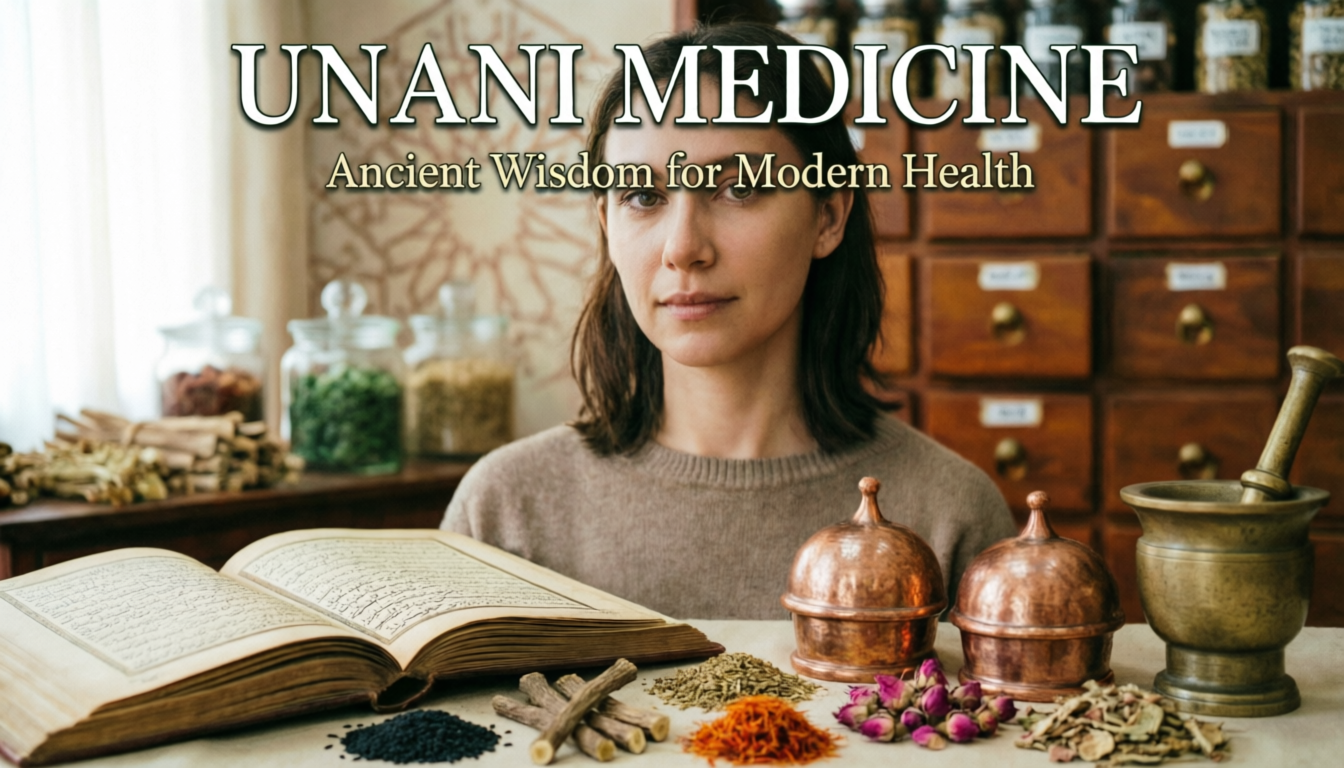
In an era where modern healthcare often feels fragmented, specialized, and increasingly reactive, a growing number of individuals are turning their gaze backward to look forward. They are seeking systems of healing that do not merely suppress symptoms but seek to understand the root cause of illness, viewing the human body not as a collection of isolated parts, but as an integrated whole deeply connected to the environment. Among these ancient traditions, Unani Medicine stands out as a sophisticated, holistic, and time-tested system that has influenced healthcare across continents for over two millennia.
Derived from the Arabic word Yunani, meaning "Greek," Unani medicine traces its intellectual roots to the teachings of Hippocrates and Galen. However, it is far more than a historical relic of Greek thought. It was preserved, enriched, and expanded by Arab and Persian scholars during the Islamic Golden Age before flourishing in the Indian subcontinent, where it became deeply intertwined with local medical traditions. Today, Unani is a recognized system of medicine in many countries, offering a unique perspective on health, disease, and wellness that complements modern biomedical approaches.
This comprehensive guide is designed for the complete beginner. Whether you are a student of alternative medicine, a healthcare professional exploring integrative options, or simply a curious individual seeking a deeper understanding of your own health, this article will walk you through the core principles, diagnostic methods, treatment strategies, and pharmacological wonders of Unani medicine. We will also place Unani in context, comparing it with other major medical systems like Ayurveda, Traditional Chinese Medicine (TCM), and Western Biomedicine, to help you understand its unique place in the global healthcare landscape.
Part 1: The Philosophical Foundations – Understanding the Worldview of Unani
To truly grasp Unani medicine, one must first understand its philosophical underpinnings. Unlike Western biomedicine, which is largely mechanistic and reductionist, Unani is holistic and vitalistic. It is based on the belief that the universe and the human body are composed of the same fundamental elements and are governed by the same natural laws. Health is not merely the absence of disease; it is a state of dynamic equilibrium between the body, mind, and environment.
The Theory of Four Elements (Arkan)
At the most basic level, Unani philosophy posits that everything in the universe, including the human body, is made up of four primary elements:
- Earth (Ard): Represents solidity and structure.
- Water (Ma’): Represents fluidity and cohesion.
- Air (Hawa): Represents movement and gas.
- Fire (Nar): Represents energy and heat.
These elements are not just physical substances but represent fundamental qualities and states of matter. In the human body, these elements combine to form various tissues and organs. For instance, bones have a higher proportion of Earth, blood has more Water and Air, and bodily heat is associated with Fire. The balance of these elements within the body determines an individual’s physical and mental constitution.
The Concept of Temperament (Mizaj)
The interaction of the four elements gives rise to four primary qualities: Hot, Cold, Wet, and Dry. These qualities combine in pairs to create nine distinct temperaments, or Mizaj. Every individual is born with a unique innate temperament (Mizaj-e-Asli), which determines their physical appearance, psychological traits, susceptibility to certain diseases, and response to food and drugs.
The Nine Temperaments
- Balanced (Mu’tadil): An ideal state where all qualities are in equilibrium.
- Hot (Haris): Dominance of heat.
- Cold (Barid): Dominance of cold.
- Wet (Ratib): Dominance of moisture.
- Dry (Yabis): Dominance of dryness.
- Hot and Wet (Haris-Ratib)
- Hot and Dry (Haris-Yabis)
- Cold and Wet (Barid-Ratib)
- Cold and Dry (Barid-Yabis)
Understanding one’s Mizaj is crucial in Unani medicine. For example, a person with a "Hot and Dry" temperament may be prone to inflammatory conditions, insomnia, and acidity, and would benefit from cooling and moistening foods. Conversely, a person with a "Cold and Wet" temperament might struggle with sluggish digestion, lethargy, and respiratory congestion, requiring warming and drying interventions. This personalized approach is the hallmark of Unani practice.
The Four Humors (Akhlat)
While the elements and temperaments provide the structural framework, the functional dynamics of the body are governed by the Four Humors (Akhlat). These are subtle, fluid substances produced from the digestion of food. They circulate throughout the body, nourishing tissues and maintaining physiological functions. The four humors are:
- Dam (Blood):
- Qualities: Hot and Wet.
- Function: Nourishes the body, carries vitality, and supports growth. Associated with spring and air.
- Imbalance: Excess leads to inflammation, fever, hypertension. Deficiency causes anemia and weakness.
- Balgham (Phlegm):
- Qualities: Cold and Wet.
- Function: Provides lubrication to joints, moistens tissues, and stabilizes the body. Associated with winter and water.
- Imbalance: Excess leads to congestion, obesity, lethargy, joint pain. Deficiency causes dryness.
- Safra (Yellow Bile):
- Qualities: Hot and Dry.
- Function: Aids in digestion, provides energy, and maintains body temperature. Associated with summer and fire.
- Imbalance: Excess causes acidity, ulcers, jaundice, anger. Deficiency leads to poor digestion.
- Sauda (Black Bile):
- Qualities: Cold and Dry.
- Function: Provides structure and solidity to tissues. Associated with autumn and earth.
- Imbalance: Excess is linked to chronic diseases, depression, anxiety, constipation. Deficiency leads to frailty.
Health, in Unani terms, is defined as I’tidal-e-Akhlat, or the equilibrium of these four humors. Disease (Imtizaaj) occurs when there is a quantitative or qualitative disturbance in one or more of these humors.
The Vital Forces (Quwa)
Unani medicine also recognizes the role of vital forces (Quwa) that govern bodily functions. These are divided into three categories:
- Quwa-e-Tabiyah (Natural Faculty): Governs nutrition, growth, and reproduction.
- Quwa-e-Haywani (Vital Faculty): Governs life processes, heartbeat, and respiration.
- Quwa-e-Nafsani (Psychic Faculty): Governs perception, movement, and mental activities.
These faculties work in harmony to maintain health. When the humors are balanced, the vital forces function optimally. When the humors are disturbed, the vital forces weaken, leading to disease.
Part 2: Diagnosis in Unani Medicine – The Art of Observation
Diagnosis in Unani medicine is a highly skilled art that relies heavily on the physician’s senses and intuition. While modern medicine depends heavily on laboratory tests and imaging, Unani diagnosis is primarily clinical, focusing on detailed observation and interrogation. The goal is to identify the specific humor that is out of balance and the underlying cause of the disturbance.
The diagnostic process in Unani is known as Tashkhis and involves several key methods:
1. Pulse Diagnosis (Nabz)
Pulse diagnosis is perhaps the most renowned and sophisticated aspect of Unani diagnostics. The pulse (Nabz) is considered a mirror of the heart and the overall state of the humors. A trained Unani physician (Hakim) can detect subtle variations in the pulse’s rhythm, volume, tension, and speed to determine the patient’s temperament and the nature of the disease.
There are ten specific characteristics of the pulse that are analyzed, including volume (large/small), strength (strong/weak), speed (fast/slow), rhythm (regular/irregular), and tension (hard/soft). For example, a rapid and strong pulse may indicate an excess of Dam (blood) or Safra (yellow bile), suggesting a hot condition like fever or inflammation.
2. Examination of Urine (Bawl)
Urine analysis (Ilaj-bil-Bawl) is another critical diagnostic tool. The Hakim examines the color, consistency, odor, and sediment of the urine. Pale yellow indicates normal health, while dark yellow or red may indicate excess heat. Cloudy urine may suggest excess phlegm or infection. Thick urine may indicate dehydration, while thin, watery urine may indicate coldness.
3. Examination of Stool (Baraz)
Stool examination provides insights into the digestive system and the state of the gut humors. Constipation may indicate excess dryness (Sauda) or heat (Safra), while diarrhea may indicate excess wetness (Balgham). Color and odor are also key indicators of internal health.
4. Physical Examination
The Hakim performs a thorough physical examination, observing the patient’s complexion (redness vs. paleness), tongue coating, eye clarity, skin texture, and body temperature. Each of these signs is interpreted through the lens of the humoral theory.
5. Patient History and Lifestyle Assessment
Unani medicine places great emphasis on the patient’s lifestyle (Asbab-e-Sitta Zarooriya or the six essential factors). The Hakim will ask detailed questions about diet, sleep patterns, exercise, emotional state, environmental exposure, and excretion habits. By synthesizing all this information, the Hakim forms a comprehensive picture of the patient’s health.
Part 3: Treatment Approaches – Restoring Balance
The ultimate goal of Unani treatment is to restore the balance of the humors and strengthen the vital forces. This is achieved through a stepwise approach, starting with the least invasive methods and progressing to more intensive interventions if necessary.
1. Regimental Therapy (Ilaj-bil-Tadbeer)
Regimental therapy is the cornerstone of Unani treatment. It involves non-pharmacological interventions aimed at removing morbid humors from the body and restoring physiological balance. Key regimental therapies include:
- Cupping (Hijama): Creating suction on the skin to draw blood to the surface, relieving congestion and removing toxins. Wet cupping involves small incisions to remove impure blood.
- Massage (Dalak): Therapeutic massage with medicated oils to improve circulation and balance humors. Warming oils are used for cold temperaments, cooling oils for hot temperaments.
- Steam Bath (Hamam): Induces sweating to eliminate toxins through the skin. Beneficial for respiratory and skin conditions.
- Leech Therapy (Taleeq): Application of leeches to remove impure blood from localized areas.
- Exercise (Riyazat): Prescribed physical activity to improve metabolism and balance humors.
2. Dietary Therapy (Ilaj-bil-Ghiza)
Food is considered medicine in Unani. Every food item has a specific temperament (hot, cold, wet, dry), and the Hakim prescribes a diet that counterbalances the patient’s humoral imbalance.
- For Hot Temperaments: Cooling foods like cucumber, watermelon, yogurt, and mint.
- For Cold Temperaments: Warming foods like ginger, garlic, lamb, and nuts.
- For Wet Temperaments: Drying foods like barley, lentils, and honey.
- For Dry Temperaments: Moistening foods like soups, stews, and ghee.
3. Pharmacological Therapy (Ilaj-bil-Dawa)
When regimenal and dietary therapies are insufficient, Unani physicians prescribe herbal, mineral, or animal-based medicines. Common dosage forms include decoctions (Joshanda), powders (Safoof), pills (Habbs), electuaries (Majoon), syrups (Sharbat), and distillates (Arq).
4. Surgical Therapy (Ilaj-bil-Yad)
Surgery is considered the last resort in Unani medicine, used only when other methods fail. Classical texts describe various surgical procedures, but today, Unani surgeons often work in conjunction with modern medical facilities for complex cases.
Part 4: Common Herbs and Formulations in Unani Medicine
Unani medicine utilizes a rich materia medica derived from plants, minerals, and animals. Here are some of the most commonly used herbs and formulations:
Key Herbs
- Senna (Sana Makki): Purgative and laxative; treats constipation and cleanses the bowel.
- Black Seed (Kalonji/Nigella Sativa): Anti-inflammatory and immune-boosting; used for respiratory and digestive issues.
Recommended: Organic Black Seed Oil
Pros: A staple in Unani Medicine, high in thymoquinone, anti-inflammatory, great for immunity.
Cons: Strong and distinct taste.
👉 Our Top Pick: organic cold-pressed black seed oil- Licorice (Mulethi): Soothing and expectorant; used for coughs, ulcers, and adrenal support.
- Turmeric (Haldi): Anti-inflammatory and blood purifier; used for joint pain and liver disorders.
- Ginger (Adrak): Warming and digestive; used for indigestion and colds.
- Rose (Gul-e-Surkh): Cooling and calming; used for eye infections and anxiety.
Popular Formulations
- Majoon-e-Arshad: A complex mixture of herbs and nuts; used as a general tonic for vitality.
- Sharbat-e-Falasfa: A cooling herbal syrup for liver disorders and fever.
- Habbe-Shifa: Pill formulation for arthritis and joint pain.
- Arq-e-Gulab: Distilled rose water for calming the mind and cooling the body.
- Khamira-e-Gaozaban: Fermented preparation for heart health and anxiety.
Part 5: Unani in Context – Comparing Medical Systems
To fully appreciate Unani medicine, it is helpful to compare it with other major medical systems: Ayurveda, Traditional Chinese Medicine (TCM), and Western Biomedicine.
| Feature | Unani Medicine | Ayurveda | Traditional Chinese Medicine (TCM) | Western Biomedicine |
|---|---|---|---|---|
| Foundational Theory | Humoral Theory: Balance of 4 Humors (Dam, Balgham, Safra, Sauda) | Dosha Theory: Balance of 3 Doshas (Vata, Pitta, Kapha) | Qi & Yin-Yang Theory: Flow of energy and balance of opposites | Mechanistic/Biological: Pathogens, genetics, physiology |
| Core Philosophy | Holistic, Natural Process View: Disease is a response to imbalance | Holistic, Personalized: Treats based on constitution (Prakriti) | Holistic, Dynamic Equilibrium: Focus on Qi flow | Reductionist, Evidence-Based: Isolates causes and treats pathologies |
| Primary Goal | Restore balance of temperament (Mizaj) | Balance among the three doshas | Restore harmonious flow of Qi | Diagnose, treat, prevent, and manage diseases |
| Key Diagnostic Tools | Pulse (Nabz), Urine/Stool Analysis, Physical Exam | Pulse, Tongue Diagnosis, Questioning | Pulse, Tongue Diagnosis, Inquiry | Labs, Imaging (X-ray, MRI), Physical Exam |
| Primary Treatments | Regimental Therapy (Cupping), Herbal/Mineral Formulations, Diet | Herbs, Diet, Panchakarma, Yoga | Acupuncture, Herbs, Tuina, Qi Gong | Pharmaceuticals, Surgery, Radiation |
Integration: Today, there is a growing trend towards integrative medicine, combining the strengths of both systems. For example, Unani’s holistic approach can complement Western medicine’s acute care capabilities. Many hospitals now offer Unani therapies alongside conventional treatments.
Part 6: Modern Relevance and Scientific Validation
In the 21st century, Unani medicine is experiencing a renaissance. As chronic diseases like diabetes, hypertension, and stress-related disorders rise, people are seeking sustainable, natural, and holistic solutions. Unani offers promising alternatives and complements to modern healthcare.
Scientific Research
Recent studies have begun to validate the efficacy of Unani treatments. Research on cupping therapy has shown effectiveness in reducing pain for conditions like lower back pain and migraines. Studies on herbs like Nigella sativa (black seed) have confirmed their anti-inflammatory and immune-boosting properties. Clinical trials have also demonstrated the benefits of Unani lifestyle interventions in managing metabolic syndrome.
Standardization and Regulation
Governments and international organizations are working to standardize Unani medicine. In India, the Central Council for Research in Unani Medicine (CCRUM) conducts research and sets standards. The World Health Organization (WHO) includes Unani in its Traditional Medicine Strategy, promoting safe and effective practices. Standardization involves identifying medicinal plants, developing quality control methods, establishing clinical guidelines, and training qualified practitioners.
Part 7: Getting Started with Unani Medicine – A Practical Guide
If you are interested in exploring Unani medicine, here are some practical steps to get started:
- Consult a Qualified Hakim: Do not self-diagnose. Seek advice from a qualified Unani practitioner registered with a recognized board (e.g., CCIM in India).
- Understand Your Temperament: Ask your Hakim to determine your Mizaj. This will help you understand your dietary needs and health risks.
- Adopt a Balanced Diet: Eat fresh, whole foods. Choose foods that balance your temperament (e.g., cooling foods for hot temperaments).
- Incorporate Regimental Therapies: Try simple therapies like massage with appropriate oils, steam inhalation, and regular moderate exercise.
- Manage Stress: Practice stress-reduction techniques like meditation and ensure adequate sleep.
- Be Patient: Unani medicine works gradually to restore balance. Consistency is key.
Frequently Asked Questions (FAQs)
Yes, when practiced by qualified practitioners and using standardized medications. Always consult a qualified Hakim.
Unani medicine can effectively manage and often reverse chronic diseases like diabetes and hypertension by addressing the root cause. Results vary by individual.
Unani treatment is generally gradual. It may take weeks or months to see significant improvements, as it focuses on long-term balance.
Yes, Unani can be used complementarily. However, inform both your Hakim and your Western doctor about all treatments to avoid interactions.
Look for practitioners registered with national regulatory bodies, such as the Central Council of Indian Medicine (CCIM) in India or local associations in other countries.