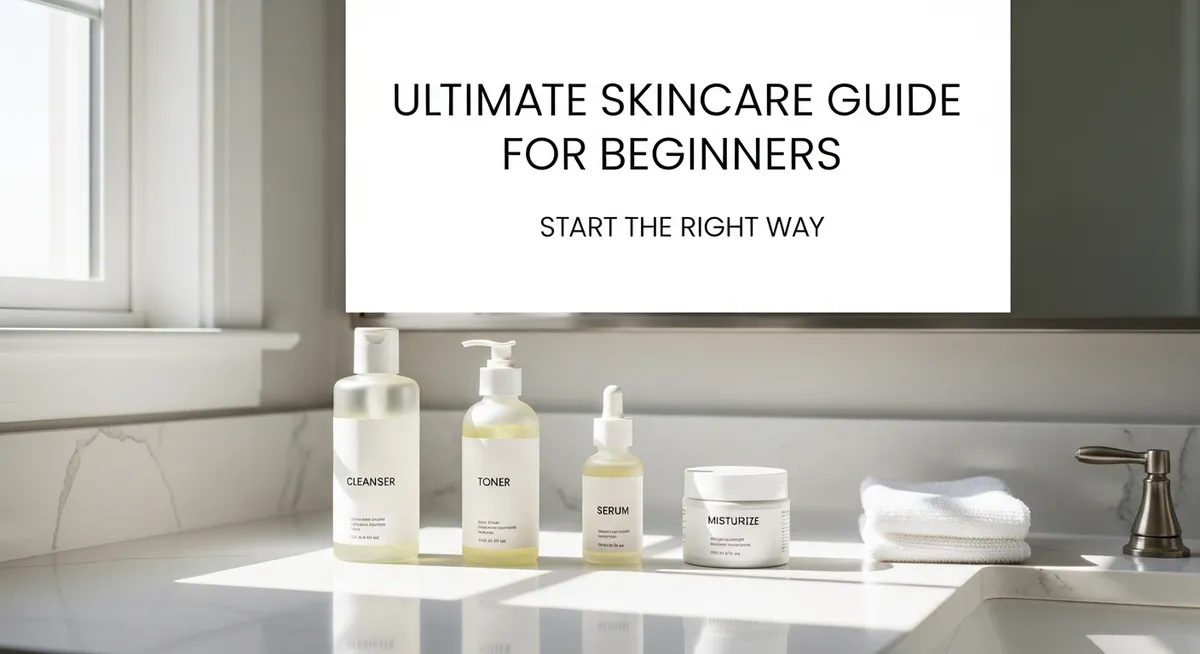
🏁 The 30-Second Skincare Summary
If you only have a minute, here are the non-negotiables for beginner success:
- Consistency is King: A simple routine followed daily beats a complex routine followed once a week.
- The Core Three: You only *need* three things: A gentle Cleanser, a reliable Moisturizer, and a broad-spectrum SPF (Sunscreen).
- Order Matters: Thin to thick. Water-based products go first, oil-based or heavy creams go last.
- Sunscreen is the #1 Anti-Ager: If you don't wear SPF 30+ daily, none of your other serums will matter.
- Patch Test Everything: Never put a new product over your whole face at once. Test it on your jawline first.
1. Fundamentals: What Beginners Get Wrong
Most beginners start their skincare journey backwards. They buy a "viral" product they saw on social media before they even know their skin type. This is the fastest way to irritate your skin barrier and waste your money. Before you buy anything, you must understand the four pillars of skin health.
A. Identifying Your True Skin Type
Your skin type is determined by genetics, but influenced by environment and age. To find yours, try the **"Wash and Wait" test**: Wash your face with a gentle cleanser, pat dry, and wait 30 minutes without applying any product.
- Oily Skin: Your face looks shiny and feels greasy all over.
- Dry Skin: Your skin feels tight, looks flaky, or has visible dry patches.
- Combination Skin: Your "T-Zone" (forehead and nose) is oily, but your cheeks are dry or normal.
- Sensitive Skin: Your skin turns red, stings, or gets itchy easily.
B. Common Myths Debunked
Myth 1: "If it burns, it means it's working." False. Stinging is a sign of irritation and potential chemical burns. Skincare should feel comfortable, not painful.
Myth 2: "People with oily skin don't need moisturizer." Incredibly false. Skipping moisturizer can actually cause your skin to overproduce oil to compensate for dehydration.
Myth 3: "Natural skincare is always better." Not necessarily. Poison ivy is natural, but you wouldn't put it on your face. Modern "synthetic" ingredients are often more stable, effective, and less likely to cause allergies than botanicals.
2.5 The Ingredients Masterclass: What’s Actually in Your Bottle?
To truly master skincare, you must learn to read an ingredient label (the **INCI list**). While marketing says "Miracle in a Bottle," the label tells the truth. Here is our deep-dive into the most researched and effective ingredients available in 2026.
✨ Vitamin C (L-Ascorbic Acid)
Vitamin C is the gold standard of antioxidants. It neutralizes damage from UV rays and pollution,
brightens dark spots, and stimulates collagen production. However, it is notoriously unstable.
Expert Tip: Look for Vitamin C in dark, opaque, or airless pump packaging. If
your serum turns dark orange or brown, it has oxidized and may actually harm your skin by causing
oxidative stress.
🧬 Retinoids (The Anti-Aging Gold Standard)
Derived from Vitamin A, retinoids are the most proven ingredient for reducing wrinkles and clearing
acne. They work at a cellular level to increase cell turnover.
Beginner Rule: Start with a low percentage (0.1% or 0.2%) and use the "Sandwich
Method" — apply moisturizer, then retinol, then more moisturizer — to buffer the irritation.
💧 Hyaluronic Acid (The Humectant)
A molecule that can hold 1,000 times its weight in water. It pulls moisture from the air into your
skin.
Critical Mistake: Never apply Hyaluronic Acid to dry skin in a dry climate. It
will pull moisture *out* of your deeper skin layers, leaving you more dehydrated. Always apply to
damp skin!
🧼 Niacinamide (The Great Communicator)
Also known as Vitamin B3, Niacinamide is the ultimate "fix-all." it regulates oil, reduces redness, strengthens the barrier, and minimizes the appearance of pores. It is generally well-tolerated by all skin types.
🧪 Salicylic Acid (BHA)
Unlike AHAs, Salicylic acid is oil-soluble, meaning it can travel *inside* the pore to dissolve clogs. It is essential for anyone with blackheads or oily skin.
🌿 Peptides (The Builders)
Peptides are short chains of amino acids that act as messengers, telling your skin to produce more collagen and elastin. They are great for firming and smoothing without the irritation of retinol.
🥛 AHAs (Glycolic & Lactic Acid)
Alpha Hydroxy Acids work on the surface of the skin to dissolve the "glue" holding dead skin cells together. Lactic acid is the gentler choice for beginners, while Glycolic is stronger and penetrates deeper.
2. The Science of the Skin Barrier
Expert Note: Think of your skin like a brick wall. Your skin cells are the bricks, and the lipids (fats/ceramides) are the mortar. This is called your **Stratum Corneum**, or Skin Barrier. When the mortar is strong, moisture stays in and irritants (bacteria/pollution) stay out.
Most skin issues — from acne to redness to premature aging — stem from a compromised barrier. When you over-exfoliate or use harsh soaps, you "strip the mortar" and leave the bricks exposed. This leads to **Transepidermal Water Loss (TEWL)**, which is the fancy scientific term for your skin’s moisture evaporating into the air.
Understanding pH Balance
Your skin is naturally slightly acidic, typically around a pH of 4.7 to 5.7. This acidity creates what we call the **"Acid Mantle"**. Traditional bar soaps are often highly alkaline (high pH), which destroys this mantle and invites acne-causing bacteria to thrive. This is why using a pH-balanced cleanser is the most important switch a beginner can make.
Cell Turnover and Aging
When you are young, your skin cells renew every 28 days. As you hit your 30s and 40s, this slows down significantly. This is why "glow" fades as we age — dead skin cells sit on the surface longer, reflecting light poorly. Ingredients like **Retinoids** and **AHAs** work by signaling your skin to speed up this process, bringing fresh, healthy cells to the surface faster.
2.1 The Skin Microbiome: Your Living Shield
For decades, we thought of skin as a purely physical barrier. But in 2026, we know that your skin is a thriving ecosystem—a "living shield" made of trillions of bacteria, fungi, and viruses. This is your **Skin Microbiome**, and it is the next frontier of dermatology. When this ecosystem is in balance, your skin is radiant and resilient. When it is disrupted (dysbiosis), you experience acne, rosacea, and chronic dryness.
Understanding Probiotics, Prebiotics, and Postbiotics
You’ve likely heard these terms in relation to gut health, but they are equally critical for your face.
- Probiotics: Live "good" bacteria that help rebuild the microbiome. Look for *Lactobacillus* or *Bifidobacterium* lysates on your labels.
- Prebiotics: The "food" for your good bacteria. These are typically complex sugars or fibers (like Xylitol or Inulin) that help the good guys thrive while starving out pathogens.
- Postbiotics: The beneficial metabolic byproducts produced by the bacteria themselves (like Lactic Acid). These act as natural chemical exfoliants and hydrators.
Clinical Discovery: Researchers have found that the *Staphylococcus epidermidis* bacteria on your skin actually produce antimicrobial peptides that kill *C. acnes* (the bacteria responsible for breakouts). This means that over-cleansing to "kill all bacteria" is actually making your acne worse by removing your skin’s natural defense force.
The Danger of "Squeaky Clean"
The biggest threat to your microbiome is the modern obsession with high-pH, foaming cleansers. That "squeaky clean" feeling is actually the sound of your skin’s biological shield being stripped away. A compromised microbiome leads to **micro-inflammation**, which is the silent engine behind premature aging. To protect your flora, use sulfate-free cleansers and avoid excessive use of high-strength alcohol-based toners.
2.6 Targeted Solutions: Solving Your Top Skin Concerns
A "one size fits all" approach rarely works in skincare. Once you have your basic routine, you can swap in one targeted treatment to address your primary concern. Here is how to handle the big four.
🚫 Acne and Breakouts
Acne is not just for teenagers. Adult acne is often hormonal and requires a balance of clearing clogs
and soothing inflammation.
The Protocol: Use a Salicylic Acid (BHA) wash or leave-on treatment. For deep,
cystic bumps, look for **Adapalene (Differin)**, which is the strongest over-the-counter retinoid
for acne.
🕰️ Fine Lines and Aging
Aging is inevitable, but how you age is largely within your control. Loss of volume and elasticity
occur as collagen breaks down.
The Protocol: Retinol at night is your best friend. In the morning, use a
heavy-hitting antioxidant like Vitamin C or Ferulic Acid. Do not forget to hydrate — well-hydrated
skin shows fewer wrinkles than dry skin.
🛑 Redness and Sensitivity
If your skin turns red when you enter a warm room or try a new product, you likely have a
hypersensitive barrier.
The Protocol: Simplify completely. Use products with **Centella Asiatica
(Cica)**, **Allantoin**, and **Colloidal Oatmeal**. Stay away from fragrance and essential oils,
which are common triggers for rosacea and eczema.
☀️ Hyperpigmentation and Dark Spots
Caused by sun damage, old acne scars, or hormones (Melasma).
The Protocol: This requires a two-pronged attack: **Inhibition** and
**Exfoliation**. Use Tyrosinase inhibitors like **Alpha Arbutin** or **Tranexamic Acid** to prevent
new spots, and **AHAs** to peel away existing ones.
3. The Ideal Beginner Routine: Step-by-Step
Now that you understand the "why" behind your skin, let’s build the "how." A common mistake is jumping into a 10-step routine immediately. Your skin needs time to acclimate to new products. We recommend starting with the **"Fundamental Four"** and adding extras only when your base is solid.
☀️ Morning Routine: Protection & Prevention
The goal of your AM routine is to shield your skin from the environment (UV rays, pollution, and blue light).
- Cleanser (Optional): If you have dry skin, a simple water rinse is enough. Oily skin types should use a gentle, non-foaming cleanser to remove overnight sebum.
- Toner (Optional): Use a hydrating toner to prep the skin. Avoid "astringents" that contain drying alcohol.
- Antioxidant Serum: This is where you apply **Vitamin C**. It works synergistically with your sunscreen to neutralize free radicals from the sun.
- Moisturizer: A lightweight gel or lotion to seal in hydration.
- Sunscreen: The most important step. Use at least 1/4 teaspoon for your face and neck. **SPF 30 or higher** is non-negotiable.
🌙 Evening Routine: Cleanse & Repair
The goal of your PM routine is to remove the day’s grime and provide the ingredients your skin needs to repair itself during sleep.
- Double Cleanse: Use an oil-based cleanser or micellar water first to break down sunscreen and makeup, followed by your regular water-based cleanser.
- Treatment (The "Active" Step): This is where you apply targeted ingredients
like **Retinoids**, **Exfoliating Acids (AHA/BHA)**, or **Niacinamide**.
Rule: Never use more than one strong active in the same night when starting out. - Eye Cream (Optional): If you have specific concerns like dark circles or puffiness.
- Moisturizer: Usually a thicker, more occlusive cream than your daytime version to prevent moisture loss.
💡 Pro Tip: Wait 5-10 minutes after applying your actives before putting on moisturizer. This allows the pH of the active to work its magic without being neutralized immediately by your cream.
3.5 The Chemistry of Layering: Molecular Weights & pH
If you have ever applied a serum and noticed it "pilling" into little balls, you have experienced a chemistry clash. Layering skincare is a science of physics and molecular weights. To get the best results, you must ensure each product can actually reach its target destination within the skin layers.
The Rule of Molecular Weights (Daltons)
Skin absorption is governed by the **500 Dalton Rule**. Molecules larger than 500 Da (like most collagen molecules) cannot penetrate the skin barrier and will simply sit on top as a humectant.
- Liquid/Water Serums: Low molecular weight. They travel deep into the epidermis.
- Gels & Lotions: Medium molecular weight. They bridge the gap between hydration and barrier support.
- Creams & Oils: High molecular weight. They are designed to stay on the surface to seal everything in.
pH Independence and Dependency
Certain ingredients require a specific pH environment to remain active.
- Vitamin C (L-Ascorbic Acid): Needs a pH of **3.5 or lower** to penetrate. If you apply it over a high-pH cleanser without waiting, it becomes useless.
- Niacinamide: Prefers a more neutral pH (around 5.5 to 6.0).
- The Clash: Mixing high-concentration Vitamin C with Niacinamide at the same time can cause "flushing" (redness) as the Niacinamide converts to Niacin, which dilates blood vessels.
Dynamic Layering Tip: If you are using a chemical exfoliant (like Glycolic Acid), apply it to dry skin, wait 2 minutes, then apply your hydrating serum. The acid lowers the skin's pH, which actually *increases* the absorption of the subsequent water-based products.
4. Best Products to Try (The Beginner's Kit)
Choosing products is the hardest part. Below are our top recommendations for 2026, categorized by skin type and price point. These have been selected based on ingredient stability, clinical study results, and thousands of user reviews.
CeraVe Hydrating Facial Cleanser
A cult classic for a reason. It contains three essential ceramides and hyaluronic acid to cleanse without stripping.
Pros
- Non-stripping
- Fragrance-free
- Budget-friendly
Cons
- Doesn't remove heavy makeup
La Roche-Posay Toleriane Foaming Cleanser
Effectively removes excess oil while maintaining the skin's natural moisture barrier with prebiotic thermal water.
Pros
- Deep cleans
- pH balanced
- Niacinamide enriched
Cons
- Slightly drying for dry skins
The Ordinary Hyaluronic Acid 2% + B5
A simple, high-potency hydration serum that plumps skin and helps other products absorb better.
Pros
- Extremely affordable
- Multi-molecular weights
- Effective
Cons
- Can be slightly tacky
EltaMD UV Clear SPF 46
The holy grail of sunscreens. Dermatologist-developed, oil-free, and contains niacinamide to calm redness.
Pros
- Silky finish
- Calms acne
- Transparent on skin
Cons
- Premium price point
Paula’s Choice Skin Perfecting 2% BHA
The global leader in exfoliants. It chemically resurfaces the skin and clears pores without the harsh irritation of scrubs.
Pros
- Clears blackheads
- Brightens skin
- Very effective
Cons
- Powerful (start slow)
Kiehl’s Ultra Facial Cream
A heavyweight moisturizer that provides 24-hour hydration. Ideal for cold climates and severely dry skin barriers.
Pros
- Ultra-rich
- Non-greasy finish
- Classic formula
Cons
- Higher price point
SkinCeuticals C E Ferulic
The gold standard of Vitamin C. It is the most clinically researched antioxidant serum in existence. Expensive, but worth every penny for its stability.
Pros
- Superior stability
- Proven results
- Patent-protected
Cons
- Very high price
Neutrogena Hydro Boost Water Gel
A quenching gel that absorbs instantly like water. Perfect for those who hate the feeling of heavy cream on their face.
Pros
- Oil-free
- Lightweight
- Hydrating
Cons
- Contains fragrance
COSRX Snail Mucin 96 Essence
The K-Beauty secret to glass skin. 96% snail secretion filtrate helps repair damaged barriers and provide a deep, glossy glow.
Pros
- Soothes redness
- Unique texture
- Very healing
Cons
- Slimy texture (love or hate)
Supergoop! Unseen Sunscreen SPF 40
A totally invisible, weightless sunscreen that leaves no white cast. Doubling as a perfect primer for foundation.
Pros
- No white cast
- Velvety finish
- Oil-free
Cons
- Silicone heavy
Bioderma Sensibio H2O Micellar Water
The original professional-grade micellar water. Gently removes every trace of makeup and oil without irritating the eyes or barrier.
Pros
- Gentle
- No rinse required
- Dermatologist loved
Cons
- Bottle goes fast
YTTP Superfood Cleanser
Like a green juice for your face. Packed with kale, spinach, and green tea to provide a fresh, deep clean that feeds your skin with nutrients.
Pros
- Antioxidant rich
- Clean scent
- Sustainability focused
Cons
- Glass bottle is fragile
Continuously updated recommendations: For a deeper dive into specific categories, check our Best Moisturizers Guide or our Vitamin C comparison.
5. Advanced Tips: Mastering the Glow
Once you have mastered the basics, you can begin to fine-tune your routine for professional-level results. Skincare is as much about the *environment* as it is about the *ingredients*.
A. Ingredient Synergies
Some ingredients work better together:
- Vitamin C + Sunscreen: Boosts UV protection.
- Retinol + Peptides: Turbocharges collagen production.
- Salicylic Acid + Niacinamide: The ultimate duo for clearing blackheads and shrinking pores.
B. Environmental Shields
Did you know that **HEV Light (Blue Light)** from your computer screen can contribute to hyperpigmentation? Look for sunscreens containing **Iron Oxides** (usually found in tinted versions) to provide the only known clinical protection against blue light damage.
C. The "Wait Times" Rule
Applying products to damp skin helps them absorb (especially Hyaluronic Acid). However, applying **Retinol** or **Acid Exfoliants** to damp skin can increase irritation. Always dry your skin completely before applying a retinoid to prevent "hot spots" of irritation.
5.5 Holistic Beauty: The Internal Secrets to Great Skin
You can apply the most expensive creams in the world, but if your internal biology is out of balance, your skin will reflect it. In 2026, the connection between the **Gut, Brain, and Skin** is the hottest topic in dermatology. Here is how to support your skin from the inside out.
🍏 The Anti-Glycation Diet
When you eat high-glycemic foods (sugar, white bread, processed snacks), your blood sugar spikes.
This leads to a process called **Glycation**, where sugar molecules attach to your collagen fibers,
making them stiff and brittle. This is the primary internal cause of premature wrinkles.
The Solution: Focus on low-glycemic, antioxidant-rich foods like blueberries,
kale, fatty fish (rich in Omega-3s), and walnuts.
🧘 Stress and Cortisol
When you are stressed, your body produces **Cortisol**, the "stress hormone." Cortisol triggers your
sebaceous glands to produce more oil, leading to stress-related breakouts. It also inhibits your
skin's natural ability to repair itself overnight.
The Solution: Even 10 minutes of daily mindfulness or deep-breathing exercises
can clinically lower cortisol levels and improve your skin’s resilience.
😴 The "Beauty Sleep" Science
During deep sleep, your body enters a state of high metabolic repair. It releases **Growth Hormone**, which triggers the production of new skin cells and collagen. If you consistently sleep less than 7 hours, you are missing the most effective anti-aging treatment available—and it's free.
5.6 Professional Treatments vs. At-Home Devices
Many beginners wonder if they should invest in expensive at-home tools or save that money for a professional dermatologist visit. Here is the breakdown of what actually works.
🏠 At-Home LED Therapy
Red light therapy (633nm) and Blue light therapy (415nm) have significant clinical backing for
anti-aging and acne control. At-home masks are weaker than professional panels but effective when
used daily for 10-20 minutes.
Verdict: Great for maintenance, but do not expect instant "Botox-like" results.
🏢 Professional Microneedling & Lasers
Professional treatments like **Fraxel** or **Dermapen** create controlled micro-injuries that force
your skin into a state of hyper-repair. These are significantly more powerful than any cream.
Verdict: If you have deep acne scars or significant sun damage, skip the luxury
creams and save your budget for one professional series per year.
5.1 Global Climate Adaptive Skincare: The 2026 Strategy
One of the biggest mistakes beginners make is using the same routine year-round or when traveling cross-continent. Your skin is a reactive organ that adapts to environmental humidity, temperature, and UV index. To maintain a perfect barrier, your routine must be "adaptive."
Tropical & High Humidity (e.g., SE Asia, Florida)
In high humidity, your skin’s sebaceous glands are more active, and the air already contains significant moisture.
- The Strategy: Focus on **Gel-based hydrators** and skip heavy occlusives. Use sebum-regulating ingredients like **Niacinamide** and **Zinc PCA** to prevent the "oily slick" look.
- Sunscreen Tip: Opt for "Water-Gel" sunscreens that won't feel heavy when you sweat.
Arid & Desert Heat (e.g., Dubai, Arizona)
Dry heat causes rapid **Transepidermal Water Loss (TEWL)**, essentially sucking the moisture out of your face.
- The Strategy: Layering is key. Use a hydrating essence, followed by a cream enriched with **Ceramides**, and seal it with a **Facial Oil** (like Squalane or Rosehip) to create a barrier against the dry air.
- Warning: Be careful with Hyaluronic Acid in the desert; if there's no moisture in the air, it will pull moisture from your deeper skin layers instead.
Extreme Cold & Alpine Climates
Cold air holds less moisture, and indoor heating further dehydrates the skin. This leads to the dreaded "winter itch" and cracked barriers.
- The Strategy: "Slugging" (applying a thin layer of petrolatum or a heavy balm) at night is essential. Look for **Cholesterol** and **Fatty Acids** on your labels to mimic the natural lipids your skin stops producing in the cold.
5.2 Hormonal Cycles & Skin Biology: Beyond the Surface
Your skin is directly influenced by your internal endocrine system. Whether it's the monthly menstrual cycle, puberty, or andropause, hormones dictate oil production, sensitivity, and even pigment formation.
The Menstrual Cycle & Skin (The "Period Glow" vs. "Period Acne")
- Phase 1 (Follicular): Estrogen is rising. Skin looks its clearest and sweetest. This is the best time for professional treatments or trying new products.
- Phase 2 (Ovulation): Estrogen peaks, but Luteinizing hormone rises. You may notice a glow, but oil production begins to increase.
- Phase 3 (Luteal): Progesterone peaks. Pores tighten, but sebum becomes thicker,
trapping bacteria inside. This is when the "period acne" on the chin and jawline occurs.
The Strategy: Switch to a BHA (Salicylic Acid) cleanser 3 days before your period starts to clear the thickening sebum before it clogs.
Men’s Skincare Fact: High testosterone levels mean men typically have 25% thicker skin and produce significantly more sebum than women. However, because men often shave, their "barrier" is constantly being physically exfoliated, leading to chronic micro-irritation and ingrown hairs. Men should focus on **Post-Shave Barrier Repair** rather than aggressive scrubbing.
5.3 Digital Aging: Blue Light (HEV) & EMF Effects
In 2026, we spend an average of 8-10 hours a day in front of screens. This has led to the emergence of a new dermatological concern: **Digital Aging**. While UV rays from the sun are the primary enemy, High-Energy Visible (HEV) light from phones and laptops penetrates deeper into the dermis than UV rays.
The Impact of HEV (Blue Light)
Blue light generates **Reactive Oxygen Species (ROS)** in the skin. These unstable molecules attack collagen and elastin, leading to premature sagging and a specific type of hyperpigmentation that is harder to treat than sunspots.
- The Defense: Regular chemical sunscreens do NOT block blue light. You need **Physical blockers** containing **Iron Oxides** (usually found in tinted sunscreens) or **Lutein**-enriched serums to neutralize HEV damage.
EMF and Skin Sensitivity
There is emerging research into how Electromagnetic Fields (EMF) from devices may affect the calcium channels in skin cells, potentially leading to increased sensitivity and a weakened "tight junction" between cells. To combat this, focus on **Ectoin**—a natural stress-protection molecule found in extremophile bacteria that helps shield skin cells from environmental and electromagnetic stressors.
6. Frequently Asked Questions
1. When should I start using anti-aging products?
Technically, from birth (with sunscreen!). But for actives like retinol, the mid-20s is a great time to start preventative care as collagen production begins to slow down.
2. Can I use Vitamin C and Retinol together?
Use them at different times. Vitamin C in the morning for protection, and Retinol at night for repair. Using them together at the same time can cause severe irritation and may neutralize their effectiveness.
3. How many times a week should I exfoliate?
Beginners should start with **1-2 times per week**. Over-exfoliating is the fastest way to damage your skin barrier and cause "mystery" breakouts.
4. Do I need a toner?
Not strictly. Modern cleansers are pH balanced enough that you don't need a toner to "reset" your skin. However, hydrating toners are great for an extra moisture boost.
5. Why is my skin "purging" after a new product?
If a product increases cell turnover (like Retinol or AHA/BHA), it may bring deep congestion to the surface. This "purge" usually lasts 2-4 weeks. If it lasts longer, it's likely a breakout from an ingredient sensitivity.
6. Is expensive skincare always better?
No. You are often paying for branding, heavy glass packaging, and fragrance. Many drugstore brands like The Ordinary or CeraVe have superior clinical formulations compared to luxury counterparts.
7. Can I use facial oils instead of moisturizer?
Facial oils are "occlusives"—they lock in moisture but don't always provide it. You should use a moisturizer (which has water) and then a few drops of oil on top to seal it in.
8. What is the difference between physical and chemical sunscreen?
Physical (Mineral) sits on top and reflects UV rays. Chemical absorbs into the skin and converts UV rays into heat. Both are effective; choose what feels better on your skin!
9. How do I get rid of large pores?
You can't "open or close" pores, but you can keep them clear. Using Salicylic Acid (BHA) dissolves the oil inside the pore, making it appear smaller.
10. Does diet affect skin?
Absolutely. High-sugar diets can lead to "Glycation", which breaks down collagen. Drinking plenty of water and eating antioxidant-rich foods supports your skin's internal repair system.
11. Can I use a facial steamer at home?
Use it sparingly (maximum once a week for 5 minutes). Over-steaming can actually dehydrate the
skin by forcing moisture out and can cause broken capillaries if the steam is too hot.
Verdict: It’s okay for a "spa moment," but not a routine necessity.
12. What is the "Skin Cycling" method?
Skin cycling is a 4-night schedule: Night 1 is Exfoliation, Night 2 is Retinol, and Nights 3 and 4 are Recovery (hydration only). This prevents irritation while still getting the benefits of strong actives.
13. How often should I change my pillowcase?
At least **twice a week**. Your pillowcase collects sebum, dead skin, and hair products, which transfer back to your face and can cause "mystery" breakouts on your cheeks.
14. Does "Medical Grade" skincare actually exist?
There is no legal definition for "Medical Grade" in skincare marketing. However, brands that sell exclusively through doctor’s offices often have higher concentrations of actives or specific delivery systems. Always check the ingredients rather than the label "medical grade."
15. Can I use Vitamin C if I have active acne?
Yes, but choose a stabilized derivative like **Sodium Ascorbyl Phosphate (SAP)**, which has been clinically shown to have antimicrobial properties that can actually help clear acne as it brightens.
6.5 The Beginner’s Skincare Glossary
Confused by the jargon? Here is a quick reference guide to the terms you will see on every bottle and in every beauty magazine across the globe.
- Comedogenic:
- Ingredients likely to clog pores and cause blackheads or breakouts.
- Humectant:
- Ingredients (like Hyaluronic Acid or Glycerin) that pull water into the skin.
- Occlusive:
- Ingredients (like Petrolatum or plant oils) that form a seal on top of the skin to prevent moisture loss.
- Emollient:
- Ingredients that soften and smooth the skin's surface (like squalane).
- Free Radicals:
- Unstable molecules from pollution and UV rays that damage skin cells and cause aging.
- Purging:
- An initial breakout caused by a product that speeds up cell turnover (like Retinol).
- Sebum:
- The natural oil produced by your skin's sebaceous glands.
- Transepidermal Water Loss (TEWL):
- The process of moisture evaporating from the skin due to a weak barrier.
- Ectoin:
- A powerful natural stress-protection molecule that shields skin from allergens, pollution, and blue light.
- Ceramides:
- Lipid molecules that act as the "mortar" between skin cells to maintain the moisture barrier.
- Astringent:
- A liquid (usually alcohol-based) designed to dry out the skin and tighten pores—often too harsh for beginners.
- Chelating Agents:
- Ingredients (like EDTA) that neutralize metal ions in "hard water" to prevent skin irritation.
- Double Cleansing:
- The process of using an oil-based cleanser first, followed by a water-based cleanser.
- Free Radicals:
- Unstable molecules caused by UV rays and pollution that damage collagen and cause aging.
- Oxidation:
- The process where an ingredient (like Vitamin C) loses its effectiveness after exposure to air and light.
- Non-Comedogenic:
- Formulations that have been tested and shown not to clog pores.
- Panthenol (Vitamin B5):
- A soothing humectant that also helps to calm inflammation and promote wound healing.
- Squalane:
- A stable, skin-identical lipid that provides lightweight hydration without clogging pores.
6.1 Longevity & Lifestyle Interventions: The Internal Foundation
Topical products are only 50% of the equation. Your skin is an outward reflection of your internal homeostasis. To truly achieve the 2026 "Skin-Longevity" standard, you must optimize your biology from the inside out.
😴 Sleep Hygiene: The Cellular Night Shift
Between 10 PM and 2 AM, your skin enters a peak regenerative state. Growth hormone levels rise, and
blood flow to the skin increases, facilitating "autophagy"—the process where cells clear out
damaged proteins. Beginners should focus on "Beauty Sleep" not just for the duration, but for the
quality.
Pro Tip: Use a **Silk or Satin Pillowcase** to reduce friction (preventing
wrinkles) and decrease the absorption of your expensive night creams into the fabric.
🧘 Stress & The Cortisol Cascade
Chronic stress triggers the release of cortisol, which breaks down collagen and elastin while stimulating sebaceous glands to produce more oil. This is why "stress-acne" is a clinical reality. Incorporating 10 minutes of box-breathing or mindful meditation into your morning routine can directly lower the inflammatory markers in your skin.
🥗 Nutritional Bio-hacking for Glow
In 2026, we focus on **Glycation Prevention**. High sugar intake leads to Advanced Glycation End-products (AGEs), which cross-link with collagen fibers, making them brittle and yellowish.
- Antioxidant Loading: Focus on colorful polyphenols (berries, green tea, pomegranate) to neutralize free radicals before they hit your DNA.
- The Water Myth: Drinking water is essential, but "hydrating from within" also requires **Essential Fatty Acids** (Omega-3s) to build the lipid membranes that actually hold the water in your cells.
6.2 Professional Consultation Guide: Derm vs. Esthetician
Knowing when to stop DIY-ing is a critical skill for any beginner. Pushing your skin too hard with at-home acids can lead to chemical burns and long-term sensitivity.
When to See a Board-Certified Dermatologist
A Dermatologist is a medical doctor specialized in the pathology of the skin. You should consult one if:
- You have persistent, painful cystic acne that doesn't respond to OTC treatments.
- You notice a mole or spot changing color, shape, or size (the ABCDEs of skin cancer).
- You suffer from chronic conditions like Rosacea, Psoriasis, or Severe Eczema.
- You want a prescription-strength retinoid like Tretinoin (Retin-A).
When to See a Clinical Esthetician
An Esthetician focuses on the health and appearance of the skin surface. They are your partners for:
- Professional-grade facials and extractions.
- Superficial chemical peels and dermaplaning.
- Routine optimization and product texture matching.
- Microneedling and maintenance treatments.
2026 Trend: Tele-Dermatology. For many beginners, getting to a clinic is difficult. Brands like **Curology** and **Dermatica** now offer direct-to-consumer access to prescription formulas through photo-based consultations. This is the fastest way to get professional-grade actives into your routine.
6.3 Sustainability & Ethical Beauty: The New Luxury
In 2026, the global sentiment has shifted: a product isn't truly "good" if it harms the planet. Sustainable beauty is no longer a niche—it is the baseline for premium skincare.
The Refillable Revolution
Buying a new glass or heavy plastic bottle every month is an environmental debt we can no longer afford. Look for brands that offer **Cartridge-Based Refills**. You keep the beautiful outer shell and replace only the internal product vessel, reducing plastic waste by up to 80% per purchase.
Ethical Ingredient Sourcing
Beyond "Cruelty-Free," we now look for **Biodiversity-Respecting** sourcing. This includes ensuring that palm oil is RSPO certified and that botanical extracts like Frankincense or Sandalwood are harvested in ways that allow the ecosystems to regenerate. Supporting brands that participate in **Fair Trade** ensures that the communities producing your ingredients are paid a living wage.
The Truth About "Clean"
Be wary of "Greenwashing." Many brands label themselves "Clean" without a scientific basis. In 2026, we advocate for **Transparent Science**—where brands publish their full sustainability impact reports and carbon footprint data, allowing you to make an informed choice based on facts rather than marketing buzzwords.
7. The NxtLifestyle Content Hub: Deep-Dive Guides
Ready to go deeper? Explore our carefully curated list of related guides. Each of these articles is designed to help you master a specific pillar of your beauty journey.
Visual guide to your first week. AM vs PM Routine
Why your morning and night steps differ. The Order of Products
Never guess which serum goes first again. Double Cleansing Art
The two-step method for perfect skin. Vitamin C Comparison
The best antioxidants for every budget. The Retinol Bible
Master the most powerful anti-aging active. HA vs Squalane
Which hydrator is right for your skin? Sunscreen Guide
Protect yourself without the irritation. Acne Rescue Plan
Clear skin strategies that actually work. Anti-Aging by Decade
What you need in your 20s, 30s, and 40s. Beauty Diet Hub
The exact foods to eat for a natural glow. Skin Type Quiz
Find your perfect match in 2 minutes. Face Yoga Guide
Natural lifting and toning exercises. Advanced Routines
For the skincare enthusiast who wants more. Beginner Makeup
Transitioning from skincare to beauty. Ingredient Dictionary
Look up any chemical on your labels. Collagen Secrets
Do supplements actually boost your youth? Top Anti-Aging Serums
Ranked by effectiveness and value. K-Beauty Intro
Unlock the secrets of the glass-skin look. Simple Men's Guide
Skincare for him—under 2 minutes. Dark Circles Help
Erase fatigue with these top eye creams. Hair Care Hub
Don't forget the health of your scalp! Clean Beauty Basics
Sustainable and non-toxic options. Printable Charts
Download our daily tracker guides. Drugstore Gems
High-end results on a budget.
🔗 Related Articles
- 5-Minute Makeup Routine: How to Look Polished Fast (2026)
- Best Adaptogens for Skin Health: Stress-Fighting Herbs
- The Best Affordable Vitamin C Serums Under $20 (That Actually Work) | 2026 Guide
Final Thoughts: Your Skin is a Marathon, Not a Sprint
Skincare is a form of self-care that pays off in decades, not days. It is tempting to look for the "magic bullet" that will fix every concern overnight, but the most beautiful skin belongs to those who are patient and consistent. Listen to your skin — if it’s red and angry, back off the actives. If it’s glowing and happy, maintain your course.
We hope this Ultimate Skincare Guide for Beginners serves as your reliable companion as you navigate the vast and exciting world of beauty. If you found this helpful, please share it with a friend who is just starting their journey. Here is to your health, your confidence, and your glow!
Stay Radiant,
Anil Dsouza
Founder & Lead Researcher, NxtLifestyle