Affiliate disclosure: This article contains affiliate links. We may earn a commission at no extra cost to you.
๐ Introduction
Probiotics get all the attention, but prebiotics are equally important โ if not more so. Prebiotics are the fiber that feeds your beneficial gut bacteria, keeping them alive and thriving.
Without prebiotics, even the best probiotic supplements can't establish lasting colonies. This guide reveals the best prebiotic foods for skin and how to incorporate them into your daily diet.
๐ฌ Why This Matters for Skin & Beauty
Prebiotics (mostly fiber types like inulin, FOS, and GOS) selectively feed beneficial bacteria like Lactobacillus and Bifidobacterium โ the same strains proven to improve skin health.
When these bacteria ferment prebiotics, they produce short-chain fatty acids (SCFAs) like butyrate. SCFAs strengthen both the gut barrier and the skin barrier, reducing inflammation and improving moisture retention.
๐ฅ Top Prebiotic Foods for Better Skin
1. Garlic
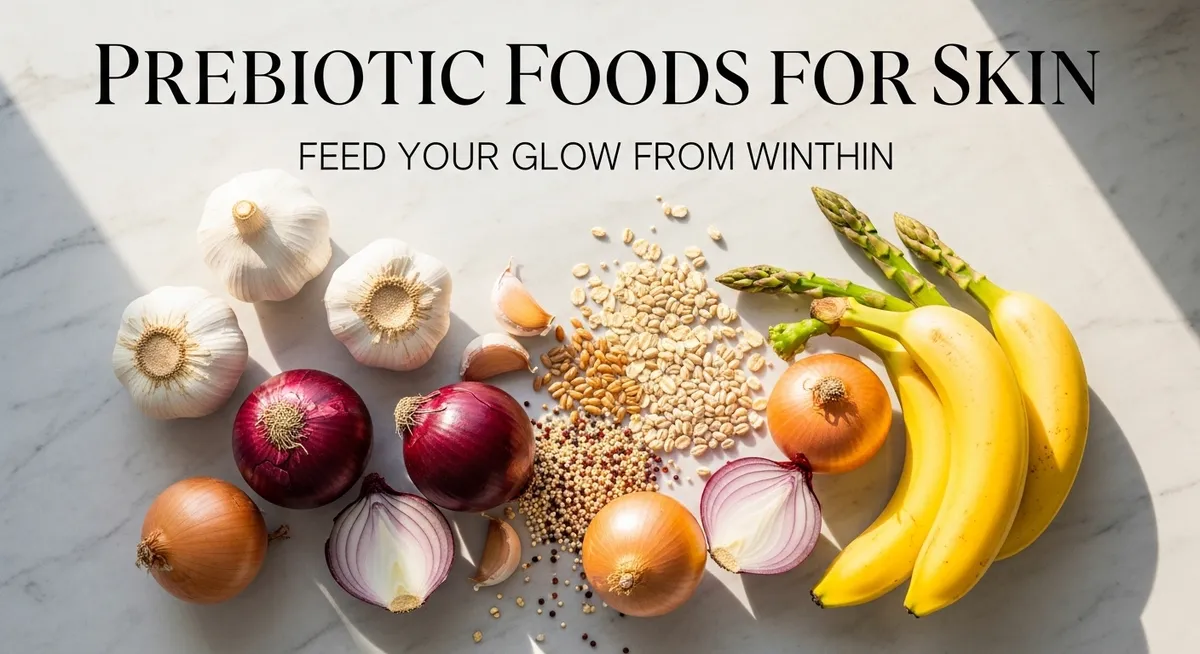
Contains inulin and fructooligosaccharides (FOS) โ two of the most potent prebiotics. Also has allicin, which is antimicrobial and anti-inflammatory.
2. Onions (Raw & Cooked)
Rich in inulin and FOS. Raw onions have the highest prebiotic content, but cooked onions still provide significant benefits.
3. Jerusalem Artichoke
One of the richest sources of inulin in nature (up to 76% of dry weight). Also called sunchokes โ excellent roasted or in soups.
4. Asparagus
Contains inulin that specifically promotes Bifidobacterium growth โ the genus most associated with improved skin hydration.
5. Bananas (Slightly Green)
Green bananas contain resistant starch, a powerful prebiotic. As bananas ripen, resistant starch converts to sugar. Choose slightly green.
6. Oats
Beta-glucan fiber in oats feeds beneficial bacteria and reduces inflammation. Also keeps blood sugar stable, preventing acne-triggering insulin spikes.
7. Chicory Root
The highest concentration of inulin of any food. Often found in prebiotic supplements and as a coffee substitute.
8. Leeks
Same family as garlic and onions. Contain FOS plus kaempferol โ a flavonoid that reduces UV-induced skin damage.
9. Dandelion Greens
Contain inulin plus liver-supporting compounds. The dual gut-liver detox makes them exceptionally effective for skin clarity.
10. Apples
Pectin fiber feeds Bifidobacterium. Eating one apple daily significantly increases beneficial gut bacteria within 2 weeks.
๐ How to Add This to Your Daily Routine
Morning: Add raw garlic or onions to salads and meals.
Afternoon: Start the day with prebiotic oatmeal topped with a slightly green banana.
Evening: Include asparagus or leeks as a dinner side dish 3-4 times per week.
๐ Best Products to Try
Organic Inulin Powder (NOW Foods)
Best for: Easy prebiotic supplement
- โ From chicory root
- โ Soluble fiber
- โ Dissolves in any drink
Hyperbiotics Prebiotic Powder
Best for: Targeted prebiotic for skin
- โ Organic acacia fiber
- โ FOS included
- โ Works with any probiotic
โ ๏ธ Common Mistakes to Avoid
- โ Adding too much prebiotic fiber too fast (causes extreme bloating)
- โ Cooking all vegetables (some prebiotics are heat-sensitive)
- โ Ignoring prebiotic diversity (eat many sources, not just one)
- โ Taking prebiotics without probiotics (they work synergistically)
- โ Expecting fast results (microbiome changes take 4-8 weeks)
โ Quick Checklist
- โ Eat 5+ grams of prebiotic fiber daily
- โ Include garlic and onions in cooking at least 5x per week
- โ Choose slightly green bananas over ripe ones
- โ Eat oats for breakfast 3-4 times per week
- โ Gradually increase fiber intake over 2 weeks to avoid bloating
โ Frequently Asked Questions
โ What's the difference between prebiotics and probiotics?
Probiotics are live bacteria. Prebiotics are the food (fiber) that feeds those bacteria. You need both for a healthy gut-skin axis.
โ Can prebiotics cause breakouts?
Initially, yes. A rapid increase in fiber can cause temporary bloating and a detox reaction. Start slowly and increase gradually.
โ How much prebiotic fiber do I need daily?
5-15 grams daily from food sources. Start at 5g and increase by 2-3g per week to avoid GI discomfort.
โ Are prebiotic supplements necessary?
Not if you eat a diverse, plant-rich diet. Supplements are helpful for people who struggle to eat enough fiber-rich foods.
โ Can I get prebiotics from supplements?
Yes โ inulin, FOS, and GOS supplements are effective. But whole foods provide prebiotics plus additional skin-supporting nutrients.
๐ Related Articles
- Best Foods for Glowing Skin
- Morning Drinks for Glowing Skin
- Gut Health & Skin Connection
- Best Supplements for Glowing Skin
- How Stress Affects Your Skin
๐ Conclusion
Prebiotics are the unsung heroes of gut-skin health. They keep your beneficial bacteria thriving, producing the metabolites that make your skin glow. Feed your gut flora well, and they'll reward you with clearer, more radiant skin. ๐ฟ