Affiliate disclosure: This article contains affiliate links. We may earn a commission at no extra cost to you.
๐ Introduction
The diversity of your gut microbiome โ the number and variety of bacterial species living in your intestines โ is the single best predictor of both gut and skin health.
People with the most diverse microbiomes have clearer skin, fewer wrinkles, and stronger immune responses. Here's how to build and maintain a diverse gut ecosystem for beautiful skin.
๐ฌ Why This Matters for Skin & Beauty
A diverse microbiome is more resilient โ it can resist pathogens, produce a wider range of beneficial metabolites, and maintain stable immune function. Low diversity is linked to acne, eczema, psoriasis, and accelerated skin aging.
Modern lifestyles โ processed food, antibiotics, stress โ dramatically reduce diversity. The average Westerner has 30-40% fewer bacterial species than hunter-gatherer populations, who rarely suffer from inflammatory skin conditions.
๐ฅ How to Increase Gut Diversity for Better Skin
1. Eat 30+ Different Plant Foods Weekly
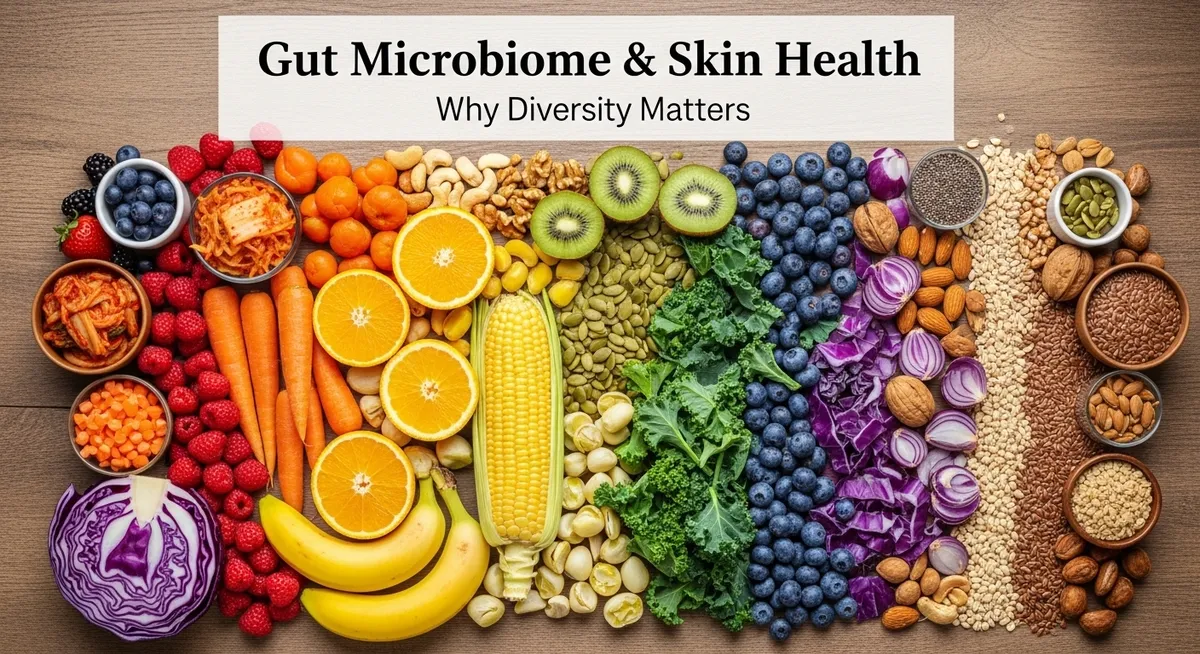
This is the #1 evidence-based strategy for diversity. Each plant food feeds different bacterial species. Count herbs, spices, nuts, seeds, and grains too.
2. Eat Seasonally and Locally
Seasonal produce introduces different microbes throughout the year, naturally diversifying your microbiome. Farmers market produce has more soil bacteria.
3. Spend Time in Nature
Exposure to soil, forests, and animals introduces environmental microbes. Children who grow up on farms have 50% less eczema.
4. Get a Pet
Dog owners have 56% more diverse gut microbiomes than non-pet owners. Pets introduce a constant stream of environmental bacteria.
5. Reduce Antibiotic Use
A single course of antibiotics can reduce gut diversity by 30% for up to 2 years. Only use when medically necessary.
6. Eat Fermented Foods Daily
Fermented foods introduce live, diverse cultures that increase long-term microbiome diversity. Variety matters โ rotate between different types.
7. Reduce Processed Food
Emulsifiers, artificial sweeteners, and preservatives in processed food actively kill beneficial bacteria, reducing diversity.
8. Try Intermittent Fasting
Fasting periods allow different bacterial populations to flourish. A 12-14 hour overnight fast promotes microbial diversity.
๐ How to Add This to Your Daily Routine
Morning: Count your weekly plant food variety โ aim for 30+ types.
Afternoon: Include a different fermented food with each meal.
Evening: Spend at least 30 minutes outdoors daily (gardening is ideal).
๐ Best Products to Try
Seed Daily Synbiotic
Best for: High-diversity probiotic supplement
- โ 24 strains
- โ Prebiotic capsule
- โ Clinically validated
Navitas Organics Superfood Mix
Best for: Easy plant diversity boost
- โ Multiple superfoods in one scoop
- โ USDA Organic
- โ Smoothie-ready
โ ๏ธ Common Mistakes to Avoid
- โ Eating the same foods every day (kills diversity)
- โ Overusing hand sanitizer and antibacterial products
- โ Avoiding all dirt and soil exposure
- โ Taking the same probiotic strain for years without rotating
- โ Relying solely on supplements instead of dietary diversity
โ Quick Checklist
- โ Track your weekly plant food variety (target 30+)
- โ Eat a different fermented food each day
- โ Spend time outdoors in nature daily
- โ Avoid unnecessary antibiotics
- โ Reduce processed food to under 20% of diet
โ Frequently Asked Questions
โ What is a 'good' level of gut diversity?
Researchers consider 500+ bacterial species as healthy. The most diverse populations have 1000+. Diet is the primary modifier of diversity.
โ Can I test my microbiome diversity?
Yes โ companies like Viome and uBiome offer at-home gut microbiome testing that measures diversity and specific species.
โ How quickly can I increase diversity?
Dietary changes begin shifting diversity within 2-4 days. Significant, stable increases take 4-8 weeks of consistent diverse eating.
โ Does low diversity always cause skin problems?
Not always โ but low diversity significantly increases risk. It creates conditions where inflammatory or pathogenic species can dominate.
โ Can antibiotics permanently reduce diversity?
Some species may not return after antibiotics. This is why proactive rebuilding with diverse plant foods and fermented foods is critical after any antibiotic course.
๐ Related Articles
- Best Foods for Glowing Skin
- Morning Drinks for Glowing Skin
- Gut Health & Skin Connection
- Best Supplements for Glowing Skin
- How Stress Affects Your Skin
๐ Conclusion
The diversity of your gut is the diversity of your beauty potential. By eating widely, embracing nature, and protecting your microbial ecosystem, you build the foundation for skin that's not just clear โ but deeply resilient. Diversity is beauty. ๐ฟ