Affiliate disclosure: This article contains affiliate links. We may earn a commission at no extra cost to you.
๐ Introduction
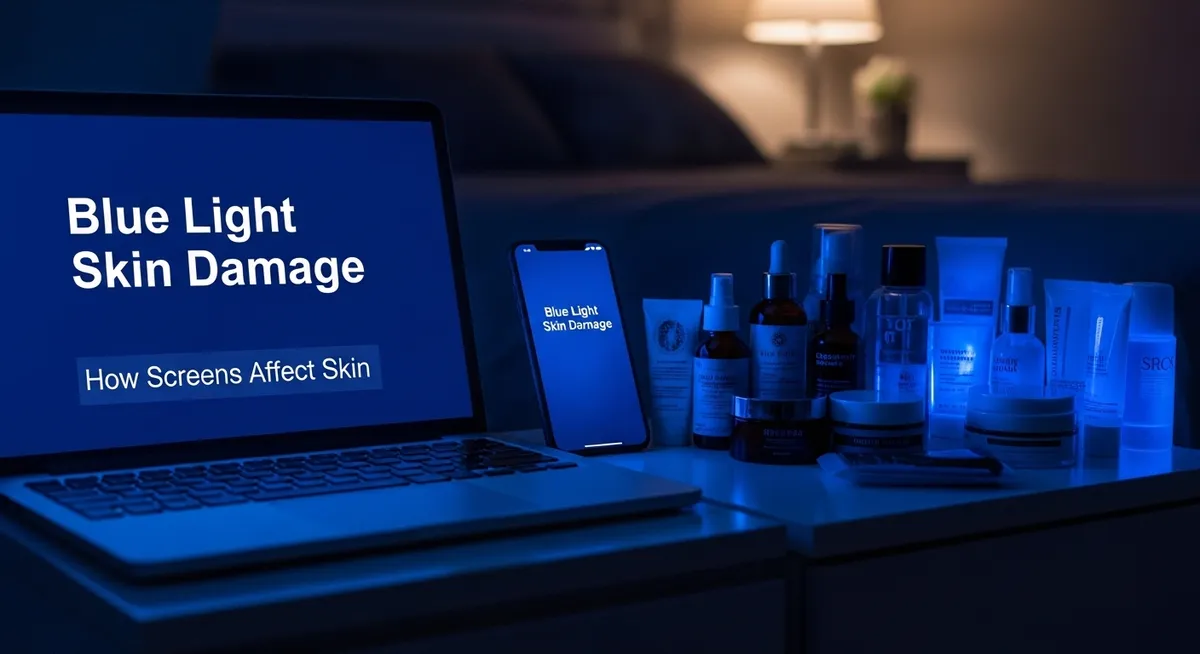
We spend an average of 7+ hours daily looking at screens โ and your skin is paying the price. Blue light (HEV light) from devices penetrates deeper into skin than UV rays, reaching the dermis where collagen lives.
While blue light damage is more subtle than sunburn, the cumulative effect of daily exposure is significant. This guide covers what blue light does to your skin and how to protect yourself in our screen-dominated world.
๐ฌ Why This Matters for Skin & Beauty
Blue light (380-500nm wavelength) generates free radicals in the skin that damage DNA, decompose collagen, and trigger melanin production (dark spots). Studies show 4 days of blue light exposure causes the same oxidative stress as 20 minutes of midday sun.
Unlike UV damage that primarily affects the epidermis, blue light penetrates to the dermis โ the structural layer where collagen and elastin live. This means blue light directly accelerates wrinkle formation and skin laxity.
๐ฅ Protecting Your Skin from Blue Light
1. Use Night Mode on All Devices
Night mode/warm filter reduces blue light emission by 50-70%. Enable it from sunset onwards to protect both skin and melatonin production.
2. Apply Antioxidant Serums Daily
Topical Vitamin C and Vitamin E neutralize blue light-generated free radicals. Apply in the morning before screen exposure.
3. Eat Blue Light-Protecting Foods
Lutein and zeaxanthin (found in kale, spinach, eggs) accumulate in skin and provide internal blue light protection.
4. Consider Blue Light Blocking Glasses
Quality blue light glasses filter 30-50% of HEV light. Especially valuable for people who work on screens 8+ hours daily.
5. Use Screen Distance Rules
Blue light intensity decreases with distance. Keep phones 12+ inches away and computer screens at arm's length.
6. Take Screen Breaks (20-20-20 Rule)
Every 20 minutes, look at something 20 feet away for 20 seconds. This gives your skin (and eyes) regular recovery intervals.
7. Apply Mineral Sunscreen Indoors
Iron oxide-containing sunscreens block blue light. If you work from home on screens all day, indoor SPF is worth considering.
8. Limit Screen Time Before Bed
Blue light suppresses melatonin โ your skin's primary nighttime antioxidant. Stopping screens 60 minutes before bed protects both sleep and skin repair cycles.
๐ How to Add This to Your Daily Routine
Morning: Morning: Apply Vitamin C serum + antioxidant moisturizer before screen work.
Afternoon: Midday: Take a screen break to eat lutein-rich greens.
Evening: Evening: Activate night mode at sunset + no screens 60 min before bed.
๐ Best Products to Try
SkinCeuticals C E Ferulic Serum
Best for: Gold standard blue light antioxidant serum
- โ Vitamin C + E + Ferulic acid
- โ Proven free radical protection
- โ Dermatologist recommended
Felix Gray Blue Light Glasses
Best for: Premium blue light filtering glasses
- โ Clear lens (no yellow tint)
- โ Proprietary filter technology
- โ Stylish frames
โ ๏ธ Common Mistakes to Avoid
- โ Assuming indoor = no skin damage (screens damage skin too)
- โ Only protecting against UV while ignoring blue light
- โ Using cheap blue light glasses with inadequate filtration
- โ Not applying antioxidants before screen exposure
- โ Scrolling in bed with maximum brightness
โ Quick Checklist
- โ Enable night mode on all devices from sunset
- โ Apply antioxidant serum every morning
- โ Eat lutein-rich foods daily (spinach, kale, eggs)
- โ Take 20-20-20 breaks during screen work
- โ No screens 60 minutes before bed
โ Frequently Asked Questions
โ Is blue light damage really significant?
Cumulative daily exposure is significant. While one day of screen use won't cause visible damage, years of 7+ hours daily adds up to measurable collagen loss and dark spots.
โ Can blue light cause dark spots?
Yes โ blue light triggers melanocytes to produce melanin. People with darker skin tones are particularly susceptible to blue light-induced hyperpigmentation.
โ Do blue light glasses work for skin?
They reduce blue light reaching your face by 30-50%, which provides some skin protection. But they primarily protect eyes โ pair with antioxidant skincare for full skin protection.
โ Should I wear SPF indoors?
If you work on screens for 6+ hours daily, a mineral sunscreen with iron oxide provides meaningful blue light protection. For minimal screen use, antioxidant serums are sufficient.
โ Which is worse for skin โ UV or blue light?
UV causes more acute damage (sunburn, immediate DNA damage). Blue light causes more chronic, cumulative damage. Both need to be addressed for comprehensive skin protection.
๐ Related Articles
- Best Foods for Glowing Skin
- Morning Drinks for Glowing Skin
- Gut Health & Skin Connection
- Best Supplements for Glowing Skin
- How Stress Affects Your Skin
๐ Conclusion
In our digital age, blue light is an unavoidable skin stressor. But with the right combination of antioxidants, screen habits, and protective nutrition, you can enjoy modern technology without sacrificing your skin's health. Awareness is the first step โ now put these protections in place and screen-proof your glow. ๐ฟ