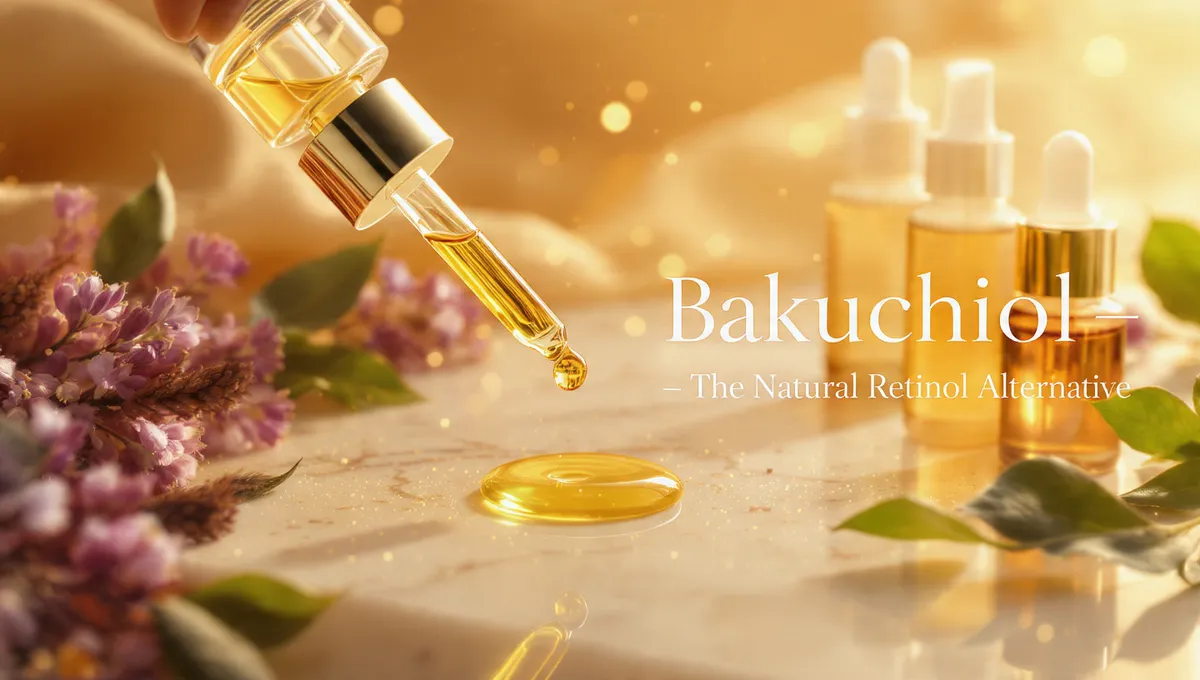
The Ancient Roots: The Psoralea Corylifolia Plant
Bakuchiol is derived from the seeds and leaves of the Babchi plant (Psoralea corylifolia), which is native to India and Sri Lanka. While it's a "new" ingredient in Western labs, it has been used in Ayurvedic and Traditional Chinese Medicine for over 2,500 years.
Ancient healers used Babchi to treat "vitiligo" and other inflammatory skin conditions. They recognized that the plant had a "warming" effect that stimulated the skin's self-repair mechanisms. Today, we know this is due to the monoterpene phenol structure of the Bakuchiol molecule.
What exactly is Bakuchiol?
Despite the similar-sounding name, Bakuchiol is not a retinoid. Molecularly, it looks nothing like Vitamin A. However, it is a functional analogue of retinol. This means that when applied to the skin, it "talks" to the same cell receptors (Retinoic Acid Receptors) that retinol does, inducing nearly identical gene expression.
The Key Difference
Retinol requires a conversion process in the skin (Retinol -> Retinaldehyde -> Retinoic Acid). Bakuchiol works immediately upon contact without needing this metabolic conversion, which is one reason it causes less irritation.
Molecular Action: Bakuchiol vs. Retinol
| Feature | Retinol | Bakuchiol |
|---|---|---|
| Photostability | Degrades in sunlight | Stable in sunlight |
| Mechanism | Genetic receptor agonist | Genetic receptor agonist |
| Side Effects | Peeling, Dryness, Redness | None reported |
| Pregnancy Safe? | Strict No | Generally Yes |
Clinical Evidence: The 2018 Breakthrough
A landmark study published in the British Journal of Dermatology in 2018 conducted a double-blind trial. Patients used either 0.5% Retinol or 0.5% Bakuchiol. At the end of 12nd weeks:
- Both groups saw an identical decrease in wrinkle surface area.
- Both groups saw similar improvements in hyperpigmentation.
- The Bakuchiol group reported significantly less scaling and stinging.
This study proved that you don't have to "suffer" to get results.
Bakuchiol vs. Other Natural Alternatives
You may see other ingredients marketed as "natural retinol," such as Rosehip Oil or Carrot Seed Oil. It is important to distinguish these:
- Rosehip Oil: Contains tiny amounts of trans-retinoic acid. It's a great oil, but it doesn't have the receptor-level potency of Bakuchiol.
- Moth Bean Extract: A botanical that mimics cell turnover, but lacks the hyperpigmentation-fighting power of Babchi.
- Sea Buckthorn: High in Vitamin A, but primarily acts as an antioxidant rather than a genetic regulator.
Key Benefits for Skin
- Collagen Production: Stimulates Type I, III, and IV collagen for firmer skin.
- Acne Treatment: Bakuchiol is naturally antibacterial and anti-inflammatory, making it excellent for adult acne.
- Skin Elasticity: Prevents the breakdown of elastin, keeping the face "bouncy."
- Zero Purging: Unlike retinol, which often causes a "purge" of breakouts, Bakuchiol soothes the skin while it works.
Advanced Layering Guide
One of the biggest advantages of Bakuchiol is its versatility. You don't have to worry about the "skincare sins" associated with retinol.
1. Bakuchiol + Vitamin C
Verdict: YES. Unlike retinol (which can be unstable with Vit C), Bakuchiol actually protects Vitamin C from oxidation. Use them together in the morning for maximum brightness.
2. Bakuchiol + Glycolic/Salicylic Acid
Verdict: YES. You can use acids and bakuchiol in the same routine without your face falling off. The bakuchiol helps buffer the potential irritation of the acids.
Bakuchiol for Men: Post-Shave Performance
Men often struggle with post-shave irritation and ingrown hairs. Bakuchiol's anti-inflammatory properties make it an ideal post-shave ingredient. It helps to calm "razor burn" while simultaneously working on the fine lines around the eyes and forehead. Because it is non-greasy, it appeals to men who dislike the "heavy" feeling of anti-aging creams.
Ingredient Synergies: What to pair it with?
To get 10x the results, look for products that pair Bakuchiol with these ingredients:
- Squalane: Mimics your skin's natural moisture for deeper penetration.
- Ceramides: To build a brick-wall defense for your moisture barrier.
- Niacinamide: To shrink pores even further while the bakuchiol handles the texture.
Sourcing & Sustainability: The Ethics of Babchi
Because the Babchi plant is wild-harvested, there are concerns about over-exploitation. Responsible brands now use Sytenol® A, which is a highly purified version of Bakuchiol (99% purity) that is sustainably sourced and free from the harmful phototoxic compounds (like psoralens) found in crude babchi oil.
Tip for Consumers
Always check if your product uses Sytenol® A. It ensures you are getting the active molecule without any of the irritating plant impurities.
Top Product Recommendations
Paula's Choice 0.5% Bakuchiol + 2% Retinol Treatment
The "Power Couple." By combining both, you get the immediate genetic signalling of bakuchiol and the long-term proven results of retinol, but at lower, non-irritating doses.
Check PriceHerbivore Bakuchiol Retinol Alternative Smoothing Serum
A jelly-textured serum that is 100% natural. Perfect for those who want a "clean beauty" routine without sacrificing performance.
Check PriceMedik8 Bakuchiol Peptides
Ideal for pregnancy or breastfeeding. This oil-based serum uses peptides to boost the firming effect of the bakuchiol.
Check Brand SiteThe 30-Day Expectations: What will you see?
- Week 1: Increased hydration and a slight "softening" of the skin surface.
- Week 2: Redness and inflammation start to subside. Post-acne marks begin to fade.
- Week 4: Fine lines around the eyes look "filled in." Overall skin tone is more even.
Frequently Asked Questions
Can I use Bakuchiol during the day?
Yes! It is photostable, meaning it won't break down in the light. In fact, its antioxidant properties help protect your skin from the sun (though you still need SPF!).
Is it safe for pregnancy?
Most dermatologists consider Bakuchiol a safe alternative during pregnancy and breastfeeding, whereas retinol is strictly prohibited. Always consult your doctor first.
Do I need to "build up" a tolerance?
No. You can start using 0.5% or 1% Bakuchiol every single night from day one.
Can it be used on the body?
Absolutely. It is fantastic for "crepey" skin on the neck and decolletage, where the skin is too thin for strong retinoids.
Does it cause sunlight sensitivity?
No. Unlike Retinol, it does not increase photosensitivity. However, because you are improving skin turnover, the "new" skin is naturally more delicate, so SPF is always recommended.
What is the best concentration?
Clinical studies are based on 0.5% to 1% concentrations. Look for products that list Bakuchiol high up on the ingredient list, rather than just "seed oil."
🔗 Related Articles
- Benefits of Rosehip Oil for Skin: The Natural Retinol for Cell Regeneration
- Benzoyl Peroxide vs. Salicylic Acid
- Best Facial Oils for Anti-Aging: Antioxidant-Rich Botanicals for Dermal Longevity
Final Thoughts
Bakuchiol is more than just a trend; it's a monumental shift in how we approach anti-aging. By moving away from the "no pain, no gain" philosophy and embracing botanical intelligence, we can achieve youthful, glowing skin without compromising its health and integrity. Whether you use it alone or as a companion to your favorite acids, Bakochiol deserves a permanent spot on your vanity.