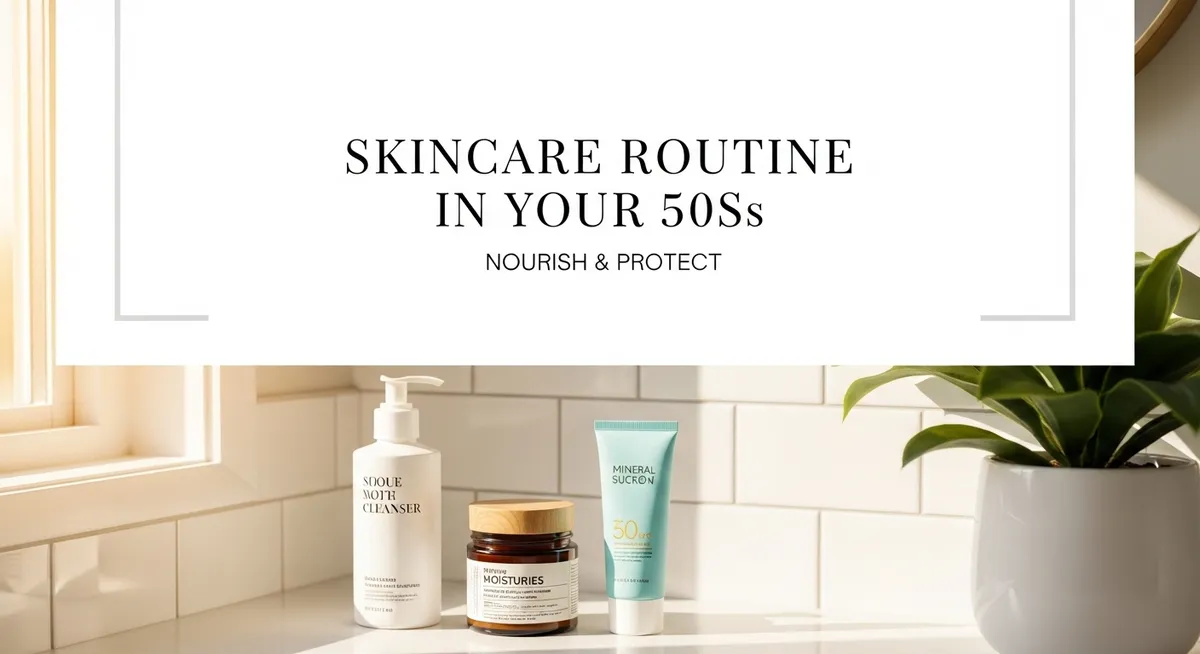
The Estrogen Connection: Why Skin Changes at 50
The transition into your 50s often coincides with menopause, which fundamentally alters skin physiology. Without the stimulating effects of estrogen, three things happen:
- Rapid Collagen Loss: Skin becomes thinner (crepy) and loses its ability to hold moisture.
- Decreased Sebum Production: The skin’s natural oil production drops significantly, leading to chronic dryness and a compromised barrier.
- Increased Sensitivity: As the barrier thins, skin may become reactive to products you've used for decades.
The Morning Routine: Maximal Hydration ☀️
Your morning is no longer about "oil control." It’s about building a moisture reservoir that lasts all day.
Step 1: Hydrating Cleansing Milk
Switch to a pH-balanced milk or oil cleanser. If your skin is very dry, you can even skip the cleanser and use a damp micro-fiber cloth to preserve your natural lipids.
Step 2: Hyaluronic Acid & Glycerin
Apply a hydrating serum to damp skin. Look for formulas that combine multiple weights of Hyaluronic Acid with Glycerin to pull moisture deep into the dermis.
Step 3: Vitamin C + Vitamin E + Ferulic
Antioxidants are still crucial. Vitamin C helps manage age spots, while Vitamin E provides the lipid-rich nourishment your skin is craving.
Step 4: Facial Oil or Barrier Balm
In your 50s, a moisturizer alone might not be enough. Layering 2-3 drops of a facial oil (like Rosehip or Argan) on top of your moisturizer seals in hydration and adds a healthy glow.
Step 5: Mineral SPF 50
Mineral sunscreens (Zinc and Titanium) are often less irritating for menopausal skin and provide excellent broad-spectrum protection.
The Night Routine: Intensive Replenishment 🌙
Focus on repair and using "gentle but effective" versions of active ingredients.
Step 1: The Balm Cleanse
A cleansing balm is a treat for dry skin. It melts away everything while leaving a thin, protective film of lipids on the surface.
Step 2: Gentle Retinoid (Encapsulated)
Your skin may be too sensitive for high-strength Tretinoin now. Switch to Encapsulated Retinol or Bakuchiol. These offer the same collagen-boosting benefits with significantly less risk of "retinol burn."
Step 3: Peptides & Ceramides
These are the "builders" and "mortar." Peptides help maintain skin density, while Ceramides glue the skin cells back together to prevent moisture loss during the night.
Step 4: The Overnight Recovery Cream
Choose a cream that feels rich and "buttery." Look for ingredients like Shea Butter, Petrolytum, or Dimethicone to create a cocoon of moisture.
📊 Top Rated Products for 50s+ Skin
| Focus Area | Editor's Pick | Star Ingredient |
|---|---|---|
| Deep Hydration | Vichy Minéral 89 | Volcanic Water + HA |
| Barrier Repair | La Roche-Posay Cicaplast Baume B5 | Panthenol + Madecassoside |
| Skin Density | Olay Regenerist Micro-Sculpting | Amino-Peptides + Niacinamide |
| Nourishing Oil | The Ordinary 100% Rosehip Oil | Essential Fatty Acids |
❓ Your 50s Skincare Questions Answered
Can I ever get rid of "crepy" skin on my arms or neck?
While you can't "erase" it completely without surgery, you can significantly improve the appearance by using high-potency Peptides and Retinol Body Creams. Maintaining hydration is 90% of the battle with crepy skin.
What is "Slugging" and should I do it?
Slugging involves applying a thin layer of petroleum jelly (like Vaseline) over your moisturizer at night. For the dry skin of the 50s, this is incredibly effective at preventing "overnight dehydration" and waking up with plump, soft skin.
Are face oils better than moisturizers?
No, they serve different purposes. Moisturizers provide water and humectants (hydration), while oils provide lipids (moisture). For best results in your 50s, use both—the moisturizer first, followed by the oil to "seal" it in.

Ivana Dsouza
Beauty editor and skincare researcher at NxtLifestyle. Dedicated to finding scientifically-backed products that actually work.