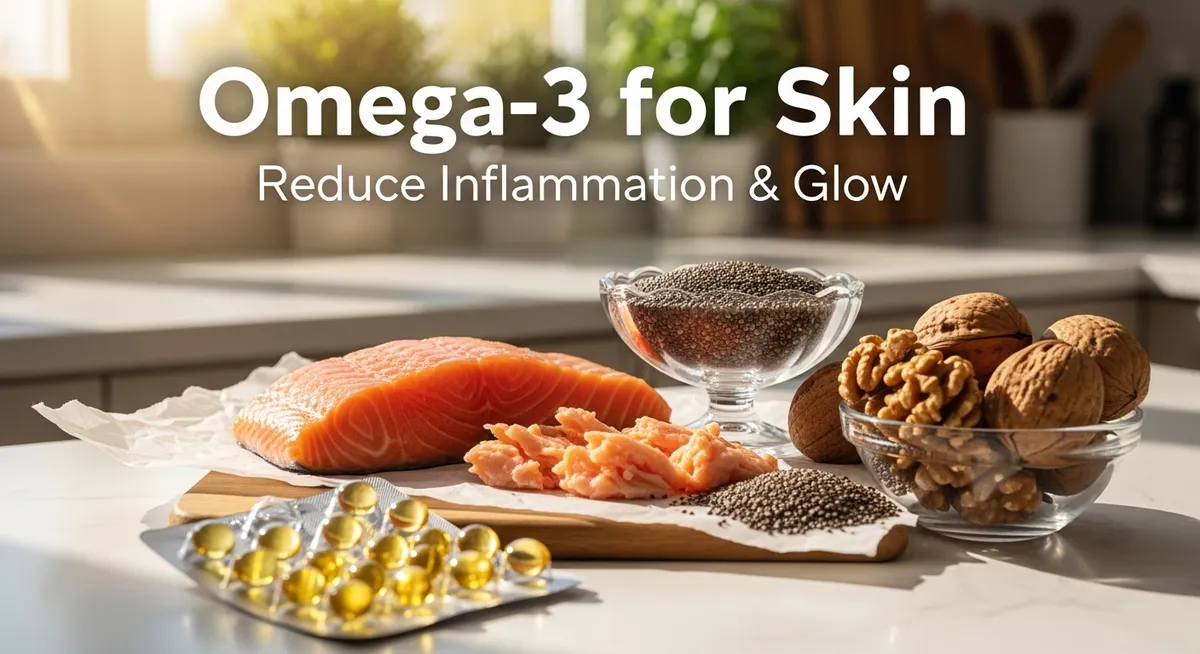
Omega-3 for Skin Benefits Infographic
Discover the essential steps for omega-3 for skin benefits. Follow our expert guide to achieve your beauty goals effectively.

Affiliate disclosure: This article contains affiliate links. We may earn a commission at no extra cost to you.

๐ŸŒŸ Introduction

Omega-3 fatty acids are your skin's anti-inflammatory superpower. These essential fats are critical components of every skin cell membrane, controlling moisture retention, inflammation, and cellular communication.

Advertisement

Most people get far too little omega-3 relative to omega-6 โ€” creating a pro-inflammatory state that drives acne, eczema, and accelerated aging. Correcting this ratio is one of the most impactful changes you can make for your skin.

๐Ÿ”ฌ Why This Matters for Skin & Beauty

Your skin cell membranes are made of fatty acids. Omega-3s keep these membranes fluid and flexible, allowing nutrients in and waste out. Without adequate omega-3s, cell membranes become rigid, leading to dry, inflamed, and poorly functioning skin.

The typical Western diet has an omega-6 to omega-3 ratio of 20:1 (optimal is 2:1). This massive imbalance creates chronic inflammation โ€” the root cause of virtually every skin condition.

๐Ÿฅ— Omega-3 Benefits for Skin

1. Powerful Anti-Inflammatory

EPA (eicosapentaenoic acid) reduces inflammatory prostaglandins and cytokines. Clinical studies show fish oil reduces inflammatory acne by 40-60%.

2. Strengthens Skin Barrier

DHA (docosahexaenoic acid) is a structural component of cell membranes. Adequate DHA creates stronger, more resilient skin that retains moisture better.

3. UV Protection

Omega-3s reduce UV-induced inflammation and may increase the skin's minimum erythemal dose (the amount of UV needed to burn).

4. Reduces Acne

Studies show 2-3g of fish oil daily reduces overall acne severity. EPA is particularly effective for inflammatory acne lesions.

5. Improves Eczema and Psoriasis

Multiple clinical trials demonstrate omega-3 supplementation reduces eczema severity and psoriasis plaque area.

6. Anti-Aging Benefits

Omega-3s protect telomeres (cellular aging markers) and reduce the matrix metalloproteinases that break down collagen.

7. Improves Skin Hydration

Omega-3s improve trans-epidermal water retention, reducing dry, flaky skin. Effects are visible within 4-6 weeks of supplementation.

8. Supports Wound Healing

Omega-3s modulate the inflammatory response during wound healing, resulting in less scarring and faster recovery.

๐Ÿ“… How to Add This to Your Daily Routine

Morning: Take omega-3 supplements with a meal containing fat for best absorption.

Afternoon: Aim for a combined 2-3g of EPA + DHA daily for skin benefits.

Evening: Eat fatty fish (salmon, mackerel, sardines) 2-3 times per week.

๐Ÿ’Š Best Products to Try

Nordic Naturals Ultimate Omega

Best for: Best overall omega-3 supplement

  • โœ… Triglyceride form (best absorbed)
  • โœ… 2x concentration
  • โœ… No fishy taste or burps
๐Ÿ‘‰ Check Price on Amazon

WHC UnoCardio 1000

Best for: Highest-rated omega-3 globally

  • โœ… 1000mg EPA+DHA per capsule
  • โœ… IFOS 5-star certified
  • โœ… rTG form
๐Ÿ‘‰ Check Price on Amazon

โš ๏ธ Common Mistakes to Avoid

  • โŒ Not taking enough (most supplements provide less than the therapeutic 2-3g of EPA+DHA)
  • โŒ Choosing low-quality fish oil (oxidized omega-3s are pro-inflammatory)
  • โŒ Taking omega-3 without fat (it's fat-soluble and needs dietary fat for absorption)
  • โŒ Expecting instant results (omega-3 takes 4-8 weeks to show skin changes)
  • โŒ Ignoring omega-6 reduction (reducing omega-6 is as important as increasing omega-3)

โœ… Quick Checklist

  • โœ… Take 2-3g combined EPA+DHA daily
  • โœ… Choose molecular-distilled, third-party tested fish oil
  • โœ… Take with meals containing healthy fats
  • โœ… Eat fatty fish 2-3 times per week
  • โœ… Reduce omega-6 intake (processed seed oils, fried foods)

โ“ Frequently Asked Questions

โ“ How much omega-3 for skin benefits?

2-3g combined EPA + DHA daily. For acne specifically, prioritize EPA (aim for at least 1g EPA per day).

โ“ Can I get enough omega-3 from food?

3 servings of fatty fish per week provides roughly 1.5g EPA+DHA daily. For therapeutic skin doses (2-3g), supplementation is usually necessary.

โ“ Krill oil vs. fish oil?

Krill oil has better absorption per gram but contains much less EPA+DHA. For skin-therapeutic doses, fish oil is more practical and cost-effective.

โ“ How long for omega-3 to improve skin?

Improved hydration in 4-6 weeks. Reduced inflammation/acne in 6-8 weeks. Full anti-aging effects develop over months.

โ“ Can omega-3 cause breakouts?

Very rarely. Some people with histamine sensitivity may react to fish oil. Try algae-based omega-3 (DHA-dominant) if this occurs.

๐Ÿ’š Conclusion

Omega-3 fatty acids are non-negotiable for beautiful skin. They address the root cause of most skin problems โ€” inflammation โ€” while simultaneously strengthening your skin barrier and protecting against aging. The evidence is overwhelming, and the benefits extend far beyond skin. Start supplementing, reduce your omega-6 intake, and watch your skin transform. ๐ŸŒฟ