🥗 Layer 1: The Tradition — Nutritive Intelligence
Ancient systems did not analyze food by its carbohydrate or protein content. They analyzed food by its qualities—how it behaved once inside the human body.
The Six Tastes of Ayurveda (Rasas)
Ayurveda posits that a truly satisfying, healing meal must contain all six tastes. Each taste is composed of specific elements and sends a distinct signal to the nervous system:
- Sweet (Earth/Water): Builds tissue and calms the nerves (e.g., rice, sweet potato, ghee).
- Sour (Earth/Fire): Stimulates digestion and cleanses tissues (e.g., lemon, fermented foods).
- Salty (Water/Fire): Softens tissues and retains moisture (e.g., sea moss, kelp).
- Pungent (Fire/Air): Stimulates metabolism and clears congestion (e.g., ginger, black pepper).
- Bitter (Air/Space): Detoxifies the liver and reduces inflammation (e.g., dandelion greens, turmeric).
- Astringent (Air/Earth): Absorbs excess moisture and tightens tissues (e.g., pomegranate, green tea).
When a diet lacks the bitter and astringent tastes (as the standard Western diet does), the liver becomes sluggish, leading directly to toxic accumulation and skin breakouts.
The Thermal Nature of Food (TCM)
Traditional Chinese Medicine classifies food by its "temperature" (not literal heat, but energetic effect). If a patient presented with red, inflamed cystic acne, a TCM doctor would diagnose "Heat in the Blood" and immediately prescribe "Cooling" foods like cucumber, mint, and mung beans. Conversely, if a patient had pale, dry skin and fatigue ("Cold/Deficiency"), they would prescribe "Warming" foods like ginger, lamb, and cinnamon to stoke the internal fire.
🔬 Layer 2: The Mechanism — The Science of the Gut-Skin Axis
Why did the ancients focus so heavily on digestion? Today, we call this the Microbiome.
Nutrigenomics: Food as Genetic Information
The science of Nutrigenomics proves that the phytonutrients in our food actually "talk" to our DNA. When you eat a dark purple blueberry or a piece of turmeric, the specific polyphenols in those foods can literally switch ON longevity genes (like Sirtuins) and switch OFF the expression of inflammatory genes (like NF-kB). You are not just fueling the machine; you are reprogramming its software with every meal.
The Gut-Skin Axis and "Leaky Skin"
The gut contains trillions of bacteria that digest our food and produce 90% of our serotonin. When we eat highly processed foods and refined sugars, we feed pathogenic bacteria, leading to a state of Dysbiosis.
This imbalance degrades the lining of the gut (Leaky Gut Syndrome). When toxic byproducts leak into the bloodstream, the immune system panics, launching a systemic inflammatory response. This inflammation travels to the skin, breaking down collagen and triggering the sebaceous glands to over-produce oil. Cystic acne is often not a skin problem; it is a gut problem.
✨ Layer 3: Modern Application — Eating for Glowing Skin
How do we translate ancient nutritive intelligence into our modern kitchens?
1. Eat the Rainbow (Polyphenol Diversity)
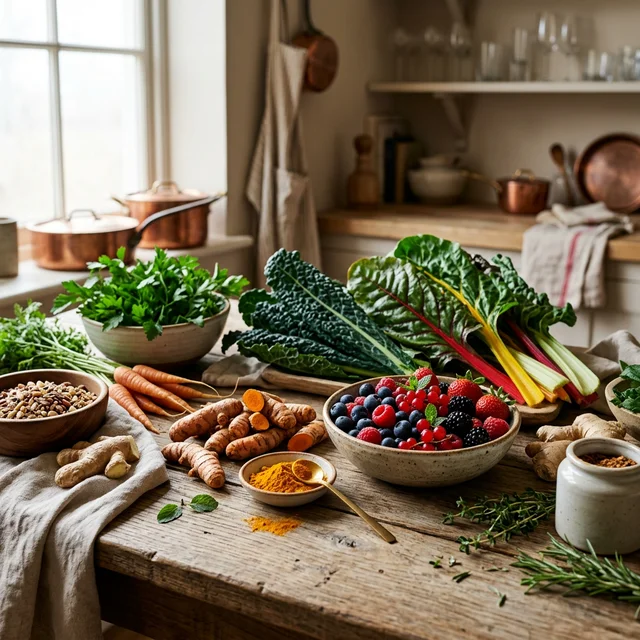
Your gut bacteria thrive on diversity. Aim to eat 30 different types of plant foods a week. Focus on deep colors—the dark reds of pomegranate, the purple of cabbage, the deep green of kale. These colors indicate high levels of Polyphenols, which act as prebiotic food for your good bacteria.
2. The Synergy of Bioavailability
Ancient cooks were master chemists. They knew to combine certain foods to unlock their power. Example: Turmeric is a powerful anti-inflammatory, but its active compound (Curcumin) is poorly absorbed. By adding black pepper (which contains Pipeline) and a healthy fat (like Ghee or Olive oil), the absorption of Curcumin into the bloodstream increases by over 2,000%.
3. Protect Your "Agni"
Stop drinking ice water with your meals. In Ayurveda, this "puts out" the digestive fire. Drink room temperature or warm water. Furthermore, chew your food until it is entirely liquid. Saliva contains amylase, the first enzyme needed to break down carbohydrates. If you don't chew properly, the stomach has to do double the work, leading to fermentation, bloating, and poor nutrient absorption.
🛒 Ritual Essentials: Recommended Support
Premium Organic Turmeric and Ginger Set
The foundation of anti-inflammatory nutrition. This high-curcumin turmeric and spicy ginger set is essential for fueling your internal digestive fire (Agni).
View on Amazon →Glass Meal Prep & Storage Containers
Medicine for your kitchen. Protect your food's vital energy (Prana) by avoiding plastics and storing your healing meals in non-toxic, temperature-resistant glass.
View on Amazon →🌍 Establish Your Holistic Authority
Food is the most profound, intimate interaction you have with the environment every single day. But to fully heal, the nourishment of the body must be paired with the nourishment of the mind.
Step 2: Connect the Global Medical Systems
How do the dietary rules of Ayurveda overlap with the humoral diets of Ancient Greece?
👉 Mandatory Next Read: Ancient Healing Systems: The Global Authority Guide. Discover the complete history and comparative matrix of world medicine.