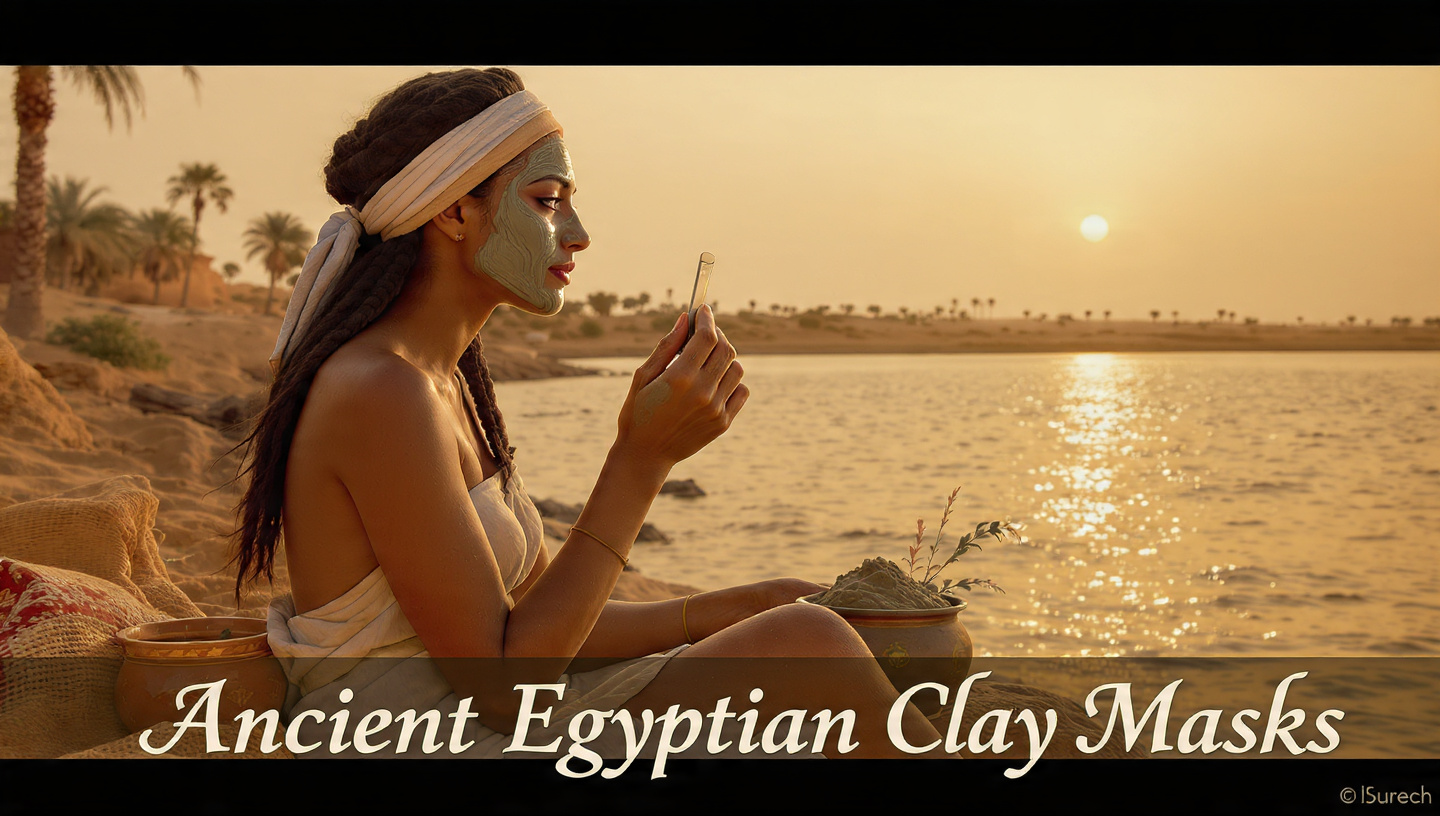
1. The Healing Earth of the Nile
Long before modern dermatology developed its arsenal of synthetic treatments, ancient Egyptians were harnessing the remarkable healing power of earth—specifically, the mineral-rich clays found along the Nile Delta and throughout the Egyptian landscape. These clays were powerful therapeutic agents used for detoxification, wound healing, and skin purification.
Archaeological evidence from Egyptian tombs reveals containers of mineral clays alongside cosmetics and medicines, suggesting their importance in daily beauty and health practices. The famous Roman physician Galen visited Egypt and recorded the Egyptian practice of using clay for skin conditions, noting their sophisticated understanding of which clays suited which conditions.
2. Rhassoul Clay — The Washing Earth
While Rhassoul clay is primarily associated with Morocco, it was known and traded throughout the ancient world, including Egypt. The name comes from the Arabic word meaning "that which is washed," describing its primary use as a purifying agent.

Cleansing earths were meticulously prepared by grinding and sifting into fine therapeutic powders.
When mixed with water, rhassoul develops a negative electrical charge that attracts positively charged toxins and heavy metals. Studies show that rhassoul improves skin elasticity, reduces roughness, and decreases surface irritation by supporting the skin's barrier function.
3. Green Clay — The Mediterranean Healer
Green clay, also known as illite, was valued for oily and congested skin. Its distinctive color comes from iron oxide and decomposed plant matter like algae. Egyptians used green clay in mud baths to treat inflammation and "excess heat" in the skin.
Green clay's effectiveness comes from its exceptional absorption capacity. It can absorb significant amounts of oil and toxins from the surface, while its iron content supports circulation and trace minerals provide essential nourishment to skin cells.
4. Kaolin — The Gentle Purifier
Kaolin is one of the mildest clays, making it ideal for sensitive or inflamed skin. Unlike more absorptive clays, kaolin is gentle and doesn't strip the skin's natural oils, making it appropriate for those with rosacea or eczema.
The pH of kaolin is slightly acidic, similar to healthy skin, which supports the acid mantle. In ancient times, it was used not just for cleansing but even to stop minor bleeding due to its hemostatic properties.
5. Bentonite Clay — Volcanic Power
Bentonite clay forms from volcanic ash aged for millions of years. It is considered the most powerful drawing clay available, used by Egyptian healers for deep-seated infections and stubborn skin conditions.
Bentonite's power comes from its unique ability to swell when hydrated, creating a gel-like substance that lifts impurities from deep within pores. It is particularly effective at absorbing environmental pollutants like lead and mercury from the skin's surface.
6. Clays of the Nile Delta
The Nile Delta provided abundant mineral sediments that were categorized by color and source. Egyptian physicians developed detailed knowledge of which local clays were appropriate for specific ailments—some for inflammation, others for balancing oil.
Desert clays were especially valued for their purity. These deposits, formed when ancient lakes evaporated, left behind concentrated sea minerals that provided comprehensive nutrition for skin cells when applied topically.
7. Traditional Egyptian Clay Formulas
Egyptian physicians often combined clays with honey, milk, and botanical oils to enhance their medicinal effects. These multi-ingredient formulas addressed specific skin types while ensuring the skin remained hydrated during the detoxification process.
A classic "Royal" formulation might include rhassoul mixed with raw honey, a splash of milk, and precious rose oil—providing a multi-layered treatment that cleanses, hydrates, and gently exfoliates in one application.
8. The Eternal Wisdom of Earth
The clay traditions of ancient Egypt represent a continuous practice of natural skincare that modern science is only beginning to fully appreciate. Sometimes, the most powerful skincare comes not from sophisticated technology but from the humblest of substances—the earth itself.
🛡️ Disclaimer
This guide is for educational purposes only and does not constitute medical advice. Always consult with a qualified healthcare provider before starting any new skincare regimen.