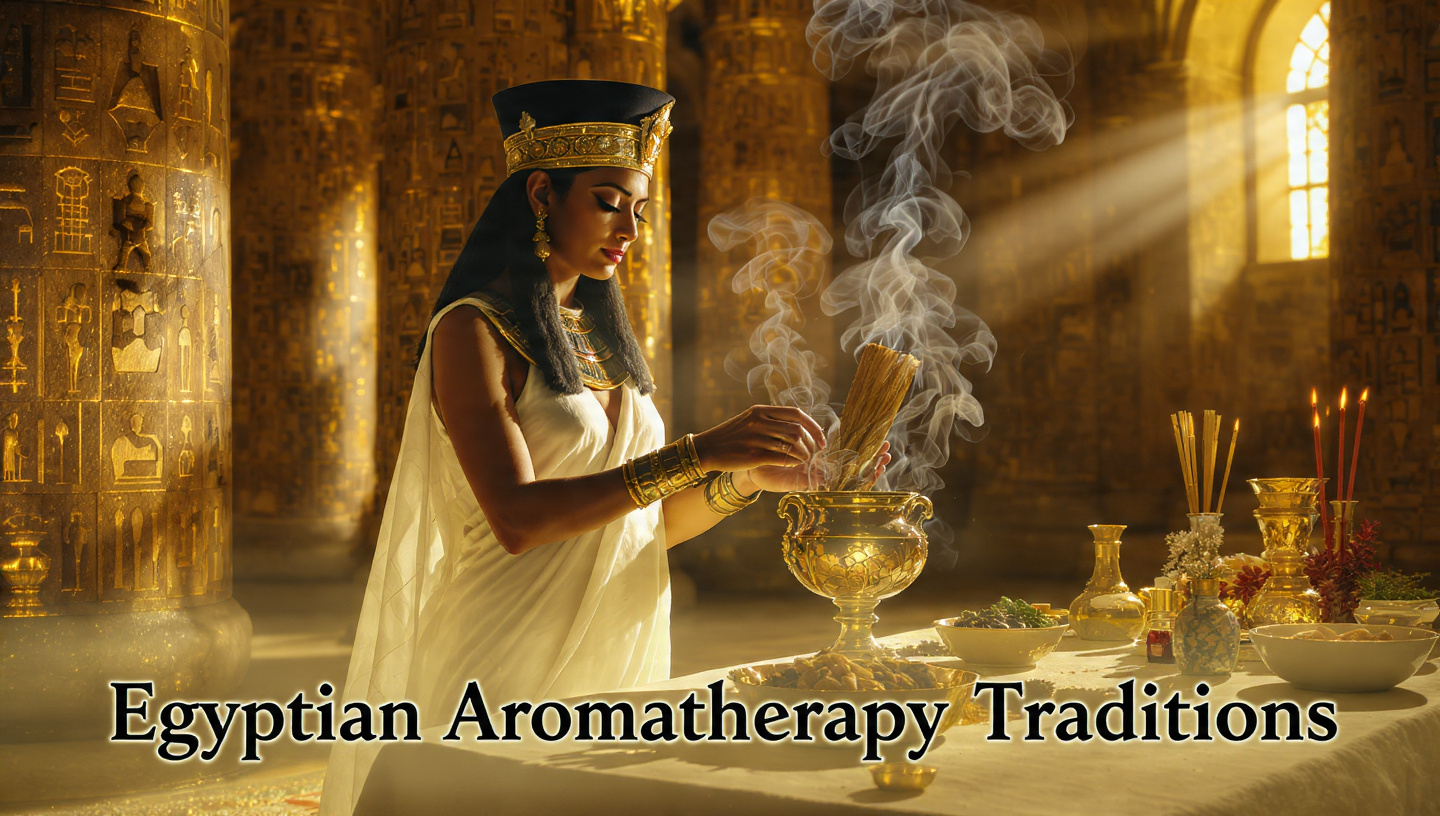
1. The Perfume of the Gods
In the ancient world, Egypt was synonymous with perfume. The Egyptians developed sophisticated methods of extracting aromatic compounds from plants, resins, and flowers, creating fragrances so precious they were reserved for pharaohs and gods. These aromatic traditions were not merely decorative—they formed the foundation of a complete therapeutic system that addressed physical health, emotional well-being, and spiritual transformation.
The Egyptian word for perfume, kyphi, came to denote an entire category of sacred aromatic preparations. Unlike modern perfume, which focuses on pleasant scent, Egyptian kyphi was designed to transform the body, heal disease, and connect humans with the divine.
2. Kyphi — The Sacred Incense
Kyphi was the most important aromatic preparation in ancient Egypt, referenced in temple records, medical papyri, and mythological texts. Unlike simple incense, kyphi was a complex formulation—some sources mention versions with 16 or more ingredients—designed for multiple purposes including healing, purification, and spiritual elevation.

Fragrant oils were an integral part of daily life and sacred ritual in ancient Egypt.
Modern neuroscience has revealed why aromatic substances can have such profound effects on the body. When we inhale aromatic compounds, they travel through the olfactory nerve directly to the limbic system—the brain's emotional center—bypassing the blood-brain barrier and conscious thought processing.
3. Frankincense — The Sun Resin
Frankincense was the most precious aromatic substance in the ancient world, worth more than gold in many periods. Derived from trees of the genus Boswellia, frankincense was reserved for the most sacred purposes. It was burned in temples dedicated to the sun god Ra and used in mummification.
The therapeutic power of frankincense comes primarily from boswellic acids, which demonstrate powerful anti-inflammatory, antimicrobial, and anticancer properties. For skin health, these compounds help reduce inflammation and stimulate collagen production.
4. Blue Lotus — The Sacred Flower
The Blue Lotus (Nymphaea caerulea) was one of the most sacred plants in ancient Egypt, appearing throughout art and mythology. Its daily opening and closing was associated with the sun's journey across the sky.
Blue lotus contains several bioactive alkaloids, including nuciferine and apomorphine. For skin health, it provides antioxidant protection, soothes irritation, and supports circulation through its flavonoid content.
5. Rose of the Nile
Rose was associated with the goddess Isis and was considered one of the most sacred flowers. Egyptian women used rose water as a facial toner, applying it after cleansing to tighten pores and refresh the skin.
Roses contain over 300 compounds, including powerful antioxidants like quercetin. Rose water's pH is slightly acidic, similar to skin's natural acid mantle, making it an excellent toner that supports the skin barrier.
6. Cedarwood — Purification and Protection
Cedarwood was one of the most important sacred woods, used extensively in temple construction and medicine. Its strong, grounding scent was associated with stability and protection.
Cedarwood essential oil contains cedrol and alpha-cedrene. It has antimicrobial and astringent properties that help tighten pores and reduce excess oil, making it valuable for acne-prone skin.
7. Jasmine — The Queen of Flowers
Associated with the goddess Hathor, jasmine was incorporated into hair oils and perfumes. Its intensely sweet fragrance and skin-softening properties made it a favorite in Egyptian beauty preparations.
Jasmine contains linalool, which demonstrates significant anti-inflammatory and antimicrobial properties. It also supports skin cell regeneration and helps reduce anxiety through its aromatic profile.
8. The Living Tradition of Egyptian Aromatherapy
The aromatic traditions of ancient Egypt represent a sophisticated system of therapeutic fragrance. Modern science continues to validate what Egyptian healers knew: that aromatic compounds have profound effects on our nervous system and skin health.
🛡️ Disclaimer
This guide is for educational purposes only and does not constitute medical advice. Always consult with a qualified healthcare provider before using essential oils.