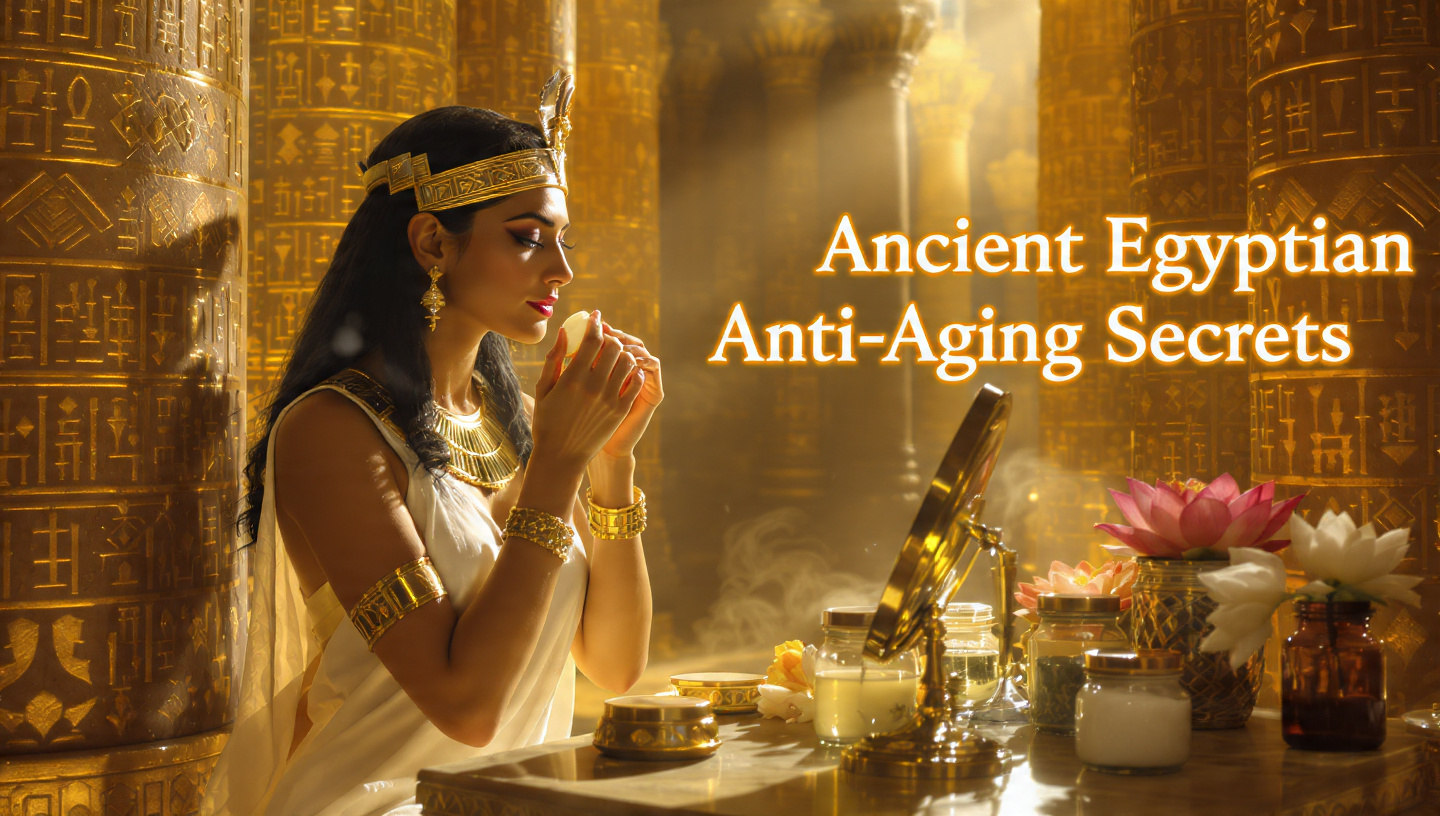
1. The Quest for Eternal Youth in the Land of the Pharaohs
Long before the modern cosmetics industry emerged, the ancient Egyptians were pioneers in the pursuit of eternal youth and beauty. In a civilization that worshipped gods of renewal and resurrection—where pharaohs were considered living embodiments of divine youth—the quest for agelessness was not vanity but spiritual imperative. The Egyptians believed that maintaining youthful, radiant skin was a reflection of inner vitality and divine favor.
Queen Nefertiti, whose name means "the beautiful one has come," ruled alongside Pharaoh Akhenaten around 1350 BCE. Her famous bust reveals not just beauty but timelessness—a complexion that appears as fresh today as it did millennia ago. Cleopatra, last of the Ptolemaic rulers, was said to have skin so luminous that Julius Caesar and Mark Antony were captivated. But their beauty was not accident or genetics alone—it was the result of carefully developed rituals, botanical knowledge, and spiritual practices that we are only now beginning to understand.
This article explores the anti-aging wisdom of ancient Egypt, revealing the secrets that made Egyptian women appear eternally youthful and explaining the science behind their time-tested practices.
2. The Milk Baths of Cleopatra: Ancient Lactic Acid Elixirs
Perhaps no anti-aging ritual is more famous than Cleopatra's legendary milk baths. Historical accounts describe the queen bathing in donkey milk, believing it preserved her youthful complexion. According to legend, she took 700 donkeys to provide the milk for her daily baths—a testament to her commitment to the practice.
But this was not mere luxury. The Egyptian understanding of milk's properties was remarkably sophisticated. Milk contains lactic acid, an alpha-hydroxy acid that gently dissolves the "glue" holding dead skin cells together, revealing the fresh, radiant skin beneath. The proteins and fats in milk also provide nourishment and hydration, creating a dual-action treatment that cleanses, exfoliates, and moisturizes simultaneously.

Ancient Egyptian medicine often combined milk, honey, and botanicals for youth-preserving elixirs.
Modern dermatology has validated what Cleopatra knew intuitively. Lactic acid is now one of the most widely used ingredients in professional chemical peels and at-home exfoliating products. Research published in the Journal of Cosmetic Dermatology demonstrates that lactic acid stimulates collagen production in the dermis, directly addressing one of the primary causes of facial aging: collagen loss.
Explore More: Ancient Beauty
→ Read next:
3. Kohl and the Art of Eye Definition
The distinctive almond-shaped eyes of ancient Egyptian art were not merely artistic convention—they represented a real beauty practice with functional benefits. Kohl, the dark powder applied around the eyes, was made from ground antimony, lead sulfide, or galena (lead ore).
Egyptian medical texts, including the Ebers Papyrus, specifically prescribe kohl for protecting the eyes against infection and inflammation. In the harsh desert environment—where blinding sunlight and blowing sand were constant threats—kohl served as a functional sunscreen and protective barrier.
4. The Art of Egyptian Massage
Ancient Egyptian healing practices placed great emphasis on the therapeutic power of touch. Egyptian physicians—considered among the first professional healers in human history—incorporated massage into their treatment protocols for beauty and anti-aging.
The anti-aging benefits of massage work through multiple biological mechanisms. First, massage dramatically increases circulation. Research published in the International Journal of Neuroscience shows that massage stimulates blood flow, delivering more oxygen and nutrients to skin cells while removing metabolic waste products that accelerate aging.
5. Sacred Incense and Aromatic Rituals
The ancient Egyptians were masters of aromatherapy, using fragrant resins and herbs not only for spiritual purposes but for beauty and anti-aging. Kyphi, the most famous Egyptian incense, was a complex blend of 16 ingredients including honey, myrrh, frankincense, and various aromatic herbs.
Modern research has extensively documented the connection between stress and aging. Aromatic resins like frankincense contain bioactive compounds with direct skin benefits. Frankincense contains boswellic acids, powerful anti-inflammatories that reduce skin redness and irritation.
6. Egyptian Dietary Wisdom for Youth
The ancient Egyptians understood that beauty begins from within. Their dietary practices were designed not only for physical health but for maintaining youthful appearance. Egyptian pharaohs and nobles consumed diets rich in fruits, vegetables, honey, and grains.
Honey was particularly prized, considered the "food of the gods" and used both internally and externally for its youth-preserving properties. Fresh fruits from the Nile Valley—figs, dates, pomegranates—provided essential vitamins and antioxidants.
7. Spiritual Practices for Inner Youth
In Egyptian philosophy, physical beauty and spiritual health were inseparable. The Egyptians believed that the soul and body were deeply interconnected—that the state of one directly affected the other. This understanding led to beauty practices that addressed not just the physical body but the spiritual and emotional aspects of being.
Modern psychodermatology validates what the Egyptians understood intuitively. Positive emotional states are associated with better skin barrier function, faster wound healing, and more youthful appearance.
8. The Eternal Legacy of Egyptian Beauty
The anti-aging wisdom of ancient Egypt represents one of humanity's oldest continuous traditions of beauty and wellness. From Cleopatra's milk baths to Nefertiti's kohl-rimmed eyes, these practices formed a comprehensive system for maintaining youth that addressed body, mind, and spirit.
At NxtLifestyle, we believe that this ancient wisdom has much to teach us. By combining the botanical knowledge, ritual practices, and holistic philosophy of ancient Egypt with modern understanding, we can create anti-aging approaches that are sustainable, natural, and deeply effective.
🛡️ Disclaimer
This guide is for educational purposes only and does not constitute medical advice. Always consult with a qualified healthcare provider before starting any new skincare regimen, especially if you have pre-existing skin conditions or are using prescription medications.